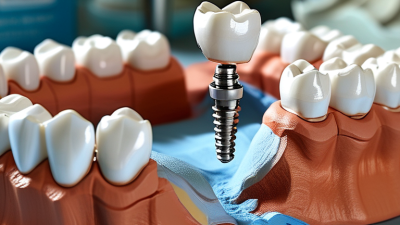
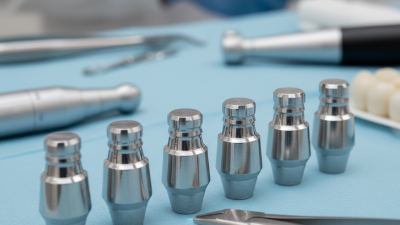
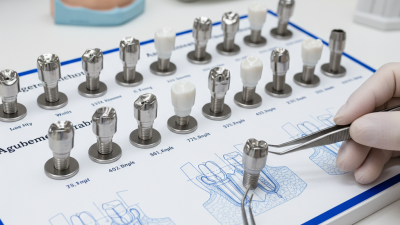
The market for Denture Implants in 2026 is becoming increasingly tough for buyers around the globe. These days, suppliers are really competing on things like solid clinical proof, consistent manufacturing, reliable delivery, and good technical support. When you're choosing a supplier, you want to see clear product specs, batch traceability, sterilization info, and well-documented quality procedures. It’s also important to get straightforward answers about implant materials, whether the prosthetics are compatible, what’s included in surgical kits, and how easy it is to get replacement parts.
This guide takes a closer look at some of the top denture implant suppliers, especially from a buying perspective. It looks at their manufacturing experience, regulatory certifications, product development efforts, export capabilities, and how they communicate after a sale. You might want to check if they have certifications like ISO 13485, market registrations, independent audit results, clinical research published about their products, or verified customer reviews. All of this info really counts, especially when a shipment arrives at a busy dental clinic with every component properly labeled and ready for inspection.
Of course, no supplier list is perfect. Things can change during 2026 — prices, delivery times, certifications, and regional approvals all need to be confirmed directly. Just because a company has great products doesn’t mean their communication is top-notch or that their distributors provide steady support. On the flip side, smaller manufacturers might offer personalized customization and quicker responses, so it’s worth keeping that in mind.
Would-be buyers should ask for samples, technical files, warranty details, minimum order sizes, and recent quality reports. Comparing training resources, packaging quality, and how they handle complaints is also smart. Remember, clinical decisions should always be made by qualified dental professionals and comply with local rules. This intro is meant to give you a practical starting point for evaluating suppliers with more confidence, but keep in mind that info available online can sometimes be outdated, incomplete, or hard to fairly compare.
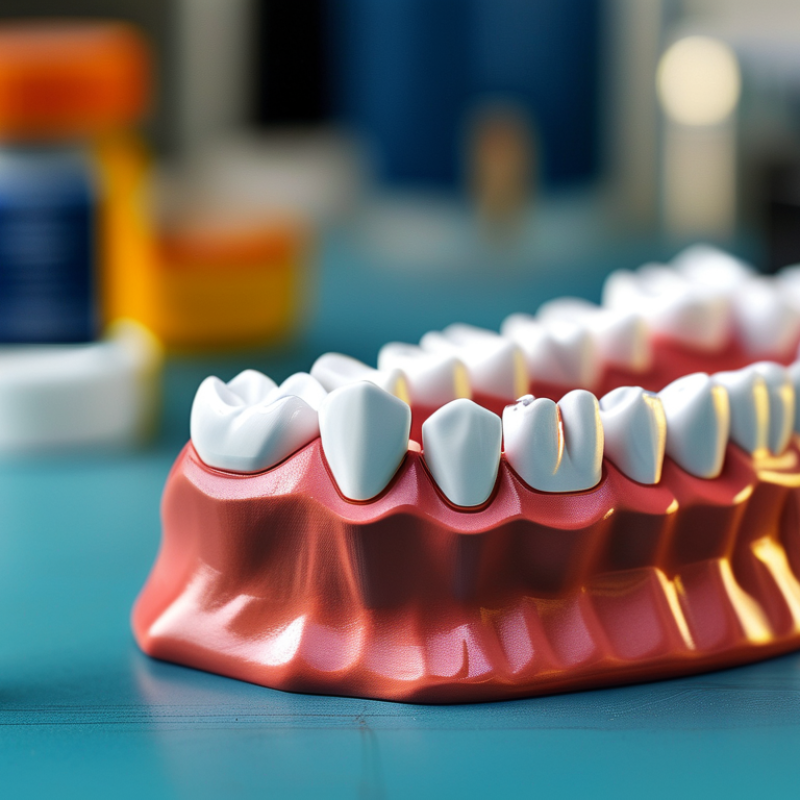
Denture implants are small, biocompatible fixtures placed in the jaw to support removable or fixed dentures. They improve retention, chewing stability, and patient confidence. Unlike conventional dentures, implant-supported designs reduce slipping during speech or meals. The clinical result depends on bone quality, surgical planning, prosthetic fit, and long-term maintenance.
The WHO Global Oral Health Status Report 2022 states that oral diseases affect nearly 3.5 billion people worldwide. A 2019 Global Burden of Disease analysis, published in The Lancet, reported a similarly substantial burden. These figures show a large need for restorative care, but they do not identify how many patients require denture implants. That distinction matters. Global buyers should assess real clinical demand instead of relying on impressive market forecasts.
Reliable suppliers provide traceable batch records, material certificates, sterilization evidence, and clear instructions for use. ISO 13485-based quality systems can support stronger production controls, but certification alone is not proof of clinical suitability. Buyers should review fatigue testing, surface-treatment data, packaging integrity, and complaint-handling procedures. For Wholesale Denture Implants, practical questions matter: Can the supplier maintain consistent dimensions across batches? Are replacement components available? Can technical teams respond across time zones?
No supplier is perfect. A careful buyer should document risks, request samples, and involve qualified dental professionals before purchasing. Small gaps in fit can become visible discomfort for patients.
Complete tooth loss affects approximately 7% of adults aged 20 and older and 23% of adults aged 60 and older worldwide, according to the World Health Organization. This creates sustained demand for dependable denture Implant Systems. Global buyers should evaluate suppliers by documented product quality, regulatory compliance, clinical support, traceability, lead times, and after-sales service rather than price alone.
Denture implants connect removable or fixed prostheses with dental implants placed in the jaw. The main choice is an implant-supported overdenture. It uses two or more implants to improve retention and reduce movement during chewing. Locator attachments suit patients seeking easier cleaning and simple removal. Bar-retained designs provide stronger stabilization when several implants can be positioned accurately.
Fixed full-arch restorations follow a different clinical purpose. They are screwed onto multiple implants and remain in the mouth during daily use. Clinicians may consider them for patients with extensive tooth loss and adequate bone support. Bone volume, gum health, bite force, and hygiene habits affect treatment planning. Cone-beam imaging often helps assess implant positions before surgery. Small details matter, such as the clearance needed for cleaning beneath the prosthesis.
Mini implants can support selected overdentures, especially when anatomy or treatment tolerance limits conventional placement. However, they are not suitable for every patient or loading condition. China Denture Implants suppliers should provide material specifications, lot traceability, sterilization records, and clear fitting instructions. Experienced buyers also review fatigue testing and compatibility data. Clinical results depend on more than the component. A well-designed denture can still fail when maintenance is ignored. That point deserves more attention. Suppliers and clinicians should discuss repair pathways, replacement parts, and follow-up support before treatment begins.
2026 Top Denture Implants Suppliers for Global Buyers
How to Evaluate Denture Implant Suppliers in 2026
Choosing a denture implant supplier requires more than comparing prices. Request current quality certificates, product specifications, and batch traceability records. Verify whether these documents match the manufacturing site and your local regulatory requirements. A polished brochure is not evidence. Ask for samples and inspect packaging, labeling, surface finish, and component fit. For a Locator Attachment Denture, compatibility must be clear across implant dimensions and attachment components.
Reliable suppliers explain their testing methods without vague promises. Ask about material composition, sterilization status, shelf life, and complaint handling. Experienced suppliers should provide practical clinical training or technical guidance for dentists and laboratories. Check their response time with a difficult question. Delayed answers can reveal weak support after purchase. Also review production capacity, inspection procedures, minimum order quantities, and delivery records. A low unit price may become expensive when replacement parts arrive late.
Tips: Build a small evaluation checklist. Contact two or three recent customers, not only the references selected by the supplier. Request a written quotation with shipping terms, warranty limits, and replacement procedures. Confirm every certificate independently when possible. Do not judge quality from one successful sample. I would repeat the assessment after several months, because supplier performance can change. No evaluation is perfect. Careful records still reduce avoidable risks.
| Evaluation Dimension | What Global Buyers Should Verify | Practical 2026 Benchmark | Recommended Evidence | Buyer Priority |
|---|---|---|---|---|
| Regulatory authorization | Whether the implant system is legally marketable in the destination country and whether the supplier can provide applicable conformity documentation. | Documentation should match the target market, product classification, intended use, and importer requirements. Requirements vary by jurisdiction. | Current certificates, declarations, registration records, product labels, and traceability documents. | Critical |
| Quality management system | The maturity of the supplier’s quality system covering design, production, inspection, complaints, and corrective actions. | A valid medical-device quality system certification, supported by documented production controls and periodic audits. | Accredited certification, audit summary, quality manual sections, nonconformity records, and corrective-action reports. | Critical |
| Material and surface specification | The exact implant material, grade, surface treatment, dimensional tolerances, and compatibility with the intended prosthetic components. | Material and surface claims should be supported by test reports, specifications, and lot-level records rather than marketing statements alone. | Material certificates, chemical analysis, surface-test results, drawings, tolerances, and batch records. | Critical |
| Clinical and technical evidence | The strength, relevance, and transparency of evidence supporting the system’s safety, performance, and intended denture applications. | Evidence should identify the product generation, patient population, follow-up period, methodology, and limitations. | Peer-reviewed studies, clinical evaluation reports, risk analyses, post-market surveillance, and technical files. | High |
| Product compatibility | Whether implants, abutments, attachments, overdenture components, instruments, and laboratory parts work together as a verified system. | The supplier should provide compatibility matrices, connection specifications, and controlled component references. | Technical drawings, compatibility charts, sample assemblies, instructions for use, and fit-test results. | Critical |
| Sterilization and packaging | Sterile status, sterilization method, packaging integrity, shelf life, storage conditions, and transport protection. | Sterile products should have validated sterilization processes, clear expiry dating, intact packaging, and documented release controls. | Sterilization validation, packaging validation, shelf-life studies, release records, and transport test reports. | Critical |
| Manufacturing capacity | The supplier’s ability to maintain consistent output during routine orders, product launches, and demand fluctuations. | Capacity should be demonstrated through documented production plans, equipment capability, staffing, and backup arrangements. | Capacity statement, production lead-time history, equipment list, facility audit, and business-continuity plan. | High |
| Traceability and recall readiness | How quickly the supplier can identify affected lots, distributors, components, complaints, and corrective actions. | Each unit or package should be linked to a controlled lot or serial record and supported by a documented recall procedure. | Traceability sample, lot records, complaint procedure, recall simulation results, and adverse-event workflow. | Critical |
| Training and clinical support | Availability of surgical, prosthetic, laboratory, and maintenance training appropriate to the buyer’s market. | Support should include controlled instructions, multilingual materials where needed, and qualified technical contacts. | Training curriculum, user manuals, case-planning resources, response-time policy, and service records. | High |
| Lead time and supply reliability | Order processing, manufacturing, export documentation, shipping, replenishment, and emergency-order performance. | Evaluate actual delivery history over multiple orders rather than relying only on quoted lead times. | On-time delivery data, inventory policy, forecast process, logistics partners, and escalation contacts. | High |
| Total cost of ownership | The complete cost of implants, components, instruments, training, freight, duties, inventory, replacements, and complaint handling. | Compare equivalent systems using landed cost and expected service requirements, not unit price alone. | Itemized quotation, freight terms, minimum order quantities, warranty terms, replacement policy, and five-year cost model. | High |
| Cybersecurity and digital workflow | Protection of digital case files, ordering portals, scanning data, software integrations, and user access credentials. | Digital systems should define access control, data handling, backups, software updates, and incident reporting responsibilities. | Security policy, privacy terms, access controls, software version records, backup procedure, and incident-response plan. | High |
| After-sales and complaint handling | The supplier’s process for technical questions, product complaints, returns, investigations, replacements, and regulatory reporting. | A documented service-level process should define contact channels, response targets, investigation steps, and closure records. | Complaint forms, escalation chart, warranty policy, anonymized case records, and customer-support performance data. | Critical |
Note: Regulatory, clinical, sterilization, and import requirements must be verified for the specific destination market and product configuration before purchase.
2026 Top Denture Implants Suppliers for Global Buyers
Quality standards begin with a controlled manufacturing process. Reliable suppliers should operate under ISO 13485 quality management systems. This standard supports documented procedures, risk controls, and corrective actions. Buyers should verify the certificate’s scope, issuing body, and expiry date. A certificate alone proves little.
Material safety also requires careful evidence. Suppliers should provide biocompatibility data aligned with ISO 10993, where applicable. Test reports should identify the exact alloy, polymer, coating, or surface treatment. Sterilization requires validated cycles, sealed packaging, and clear lot records. Ask for batch traceability. It matters when a problem appears months later.
Regulatory approval differs across markets. European buyers may need MDR documentation, while United States distribution can require FDA-related clearance or registration. Other regions apply separate rules. A trustworthy supplier should explain these differences without promising automatic approval. Review technical files, labeling, UDI information, and post-market procedures with qualified specialists. Documentation can look complete and still contain gaps. No supplier is flawless. An overlooked translation, outdated test report, or unclear intended use can delay customs and patient access. Experienced buyers should audit production areas, inspect sample packaging, and compare records against delivered products. Clear communication is a quality signal, though not proof.
Global buyers comparing denture implant suppliers should separate quoted price from delivered cost. Grand View Research valued the global dental implants market at approximately USD 4.6 billion in 2023, with projected growth near 7.1% annually through 2030. That expansion is increasing demand for Denture Implant Abutments, but pricing still depends on alloy, surface treatment, customization, and certification. Standard titanium abutments commonly receive indicative quotations of USD 35–120 per unit, while custom components may exceed USD 150. These figures are market observations, not fixed tariffs.
Minimum order quantities often range from 10 to 50 standard units. Custom orders may require 25 to 100 pieces. Ask for separate costs for tooling, inspection, packaging, and replacement parts. A low quotation can mislead. Freight, import duties, and document fees may change the final cost substantially. Request a written sample invoice before approval.
International supply capability requires more than export experience. Suppliers should provide ISO 13485 certification, material certificates, batch traceability, and biological evaluation documents aligned with ISO 10993. The International Trade Centre recommends checking customs classifications and destination-market requirements before shipment. Typical production lead times range from two to six weeks, excluding regulatory review and ocean transport. Air delivery may reduce transit time but increase landed cost. I would also verify thread compatibility with physical samples, because catalog dimensions can hide small but serious mismatches. Mistakes happen. Supplier data should be independently reviewed.
Top Denture Implants Suppliers for Global Buyers
Shipping, Customization, and After-Sales Support for Global Buyers
Global buyers need more than attractive implant prices. The WHO Global Oral Health Status Report 2022 estimates that 3.5 billion people live with oral diseases. This demand increases pressure on suppliers to deliver consistent, traceable products. Ask for batch records, material certificates, and clear implant compatibility data. ISO 13485 certification offers useful evidence of quality systems. It is not a substitute for independent verification.
Shipping details can decide whether a clinical schedule succeeds. UNCTAD’s Review of Maritime Transport reports that ships carry over 80% of global merchandise trade by volume. However, urgent dental components may require air freight. Suppliers should provide protective inner packaging, commercial invoices, harmonized codes, and shipment tracking. Confirm customs responsibilities before production. A delayed parcel can leave a patient waiting with an unfinished restoration.
Customization should begin with validated scans, jaw relations, shade references, and occlusion requirements. Buyers should request a digital preview before manufacturing. After-sales support should include fitting guidance, remake terms, complaint handling, and documented response times. Twenty-four to forty-eight hours is a practical target. Ask for named technical contacts, not only automated tickets. A polished brochure proves little. No checklist catches every clinical variation. Even experienced suppliers should review recurring remakes, because small fit problems can expose weaknesses in scanning, design, or communication.
They support removable or fixed dentures with small, biocompatible fixtures placed in the jaw. They reduce slipping. Chewing may feel steadier.
Bone quality, surgical planning, prosthetic fit, and maintenance all influence the final result. Small fitting gaps can cause discomfort. Results are never automatic.
Request traceable batch records, material certificates, sterilization evidence, and clear usage instructions. Also review fatigue testing and packaging integrity. Certification alone proves little.
It supports production controls, but it does not confirm clinical suitability by itself. Buyers should seek independent verification and qualified professional review. Do not stop at certificates.
Confirm protective packaging, commercial invoices, harmonized codes, tracking, and customs responsibilities before production. Urgent components may need air freight. A delayed parcel can interrupt treatment.
Suppliers may need validated scans, jaw relations, shade references, and occlusion requirements. Request a digital preview before manufacturing. The preview can still miss clinical variation.
It should cover fitting guidance, remake terms, complaint handling, and documented response times. A 24-to-48-hour response target is practical. Named technical contacts help.
Document risks, request samples, and involve qualified dental professionals before placing larger orders. Check dimensional consistency across batches. No checklist catches everything.
This guide to 2026 Top Denture Implants Suppliers for Global Buyers explains what Denture Implants are, how they support removable or fixed prosthetic solutions, and why dependable suppliers are essential for consistent clinical outcomes. It reviews major implant types and their applications, helping buyers match product design, materials, surgical needs, and patient requirements with suitable solutions.
The article also presents practical criteria for evaluating suppliers, including manufacturing quality, certifications, regulatory compliance, product traceability, and technical documentation. It discusses pricing, minimum order quantities, international supply capabilities, shipping arrangements, customization options, warranty terms, and after-sales support. By considering these factors together, global buyers can reduce procurement risks, improve communication with suppliers, and build reliable long-term partnerships while maintaining high standards for safety, performance, and professional use.