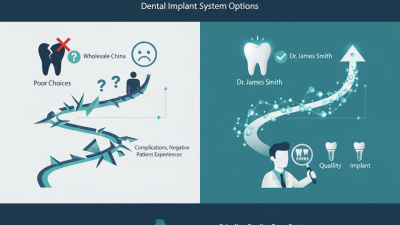
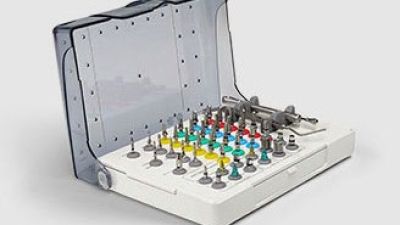
Choosing the right Dental Implant System in China isn't just about comparing prices or going for the big-name brands. There's more to it than that. You really want to look at clinical evidence, the quality of the product, how well it works with different surgical scenarios, and what kind of long-term maintenance is needed. A good system should offer precise implant designs, reliable surface treatments, and thorough documentation that dentists can rely on. It should also be versatile enough to handle various bone conditions, implant placements, and restoration needs.
In China's dental market, you'll find international giants like Straumann, Nobel Biocare, Dentsply Sirona, Osstem, and Dentium. Plus, there are several local Chinese manufacturers offering competitive options—especially for clinics right here at home. But just because a system is readily available doesn’t mean it’s automatically better clinically. Dentists need to check regulatory approvals, research studies, manufacturing standards, and the kind of training support provided. The National Medical Products Administration (NMPA) is a pretty good reference point when it comes to product registration in China.
Of course, the patient's unique situation is the most important thing. Things like bone density, gum health, medical history, and the experience level of the dentist can really make or break the outcome—sometimes even more than the brand name on the implant. A solid treatment plan often starts with detailed scans, and ongoing maintenance is just as crucial. There’s no one-size-fits-all answer here—truth be told, there isn’t a clear-cut winner.
When comparing systems, you'd want to look at things like clinical indications, how the prosthetic components connect, what options are available, warranty details, and aftercare services. It's super important to differentiate between proven evidence and marketing hype—some claims sound impressive but might not be backed up by independent research. Always stay a bit skeptical and ask questions. Ultimately, the decision should be based on a thorough dental exam and a written treatment plan. In the end, the best Dental Implant System is usually the one that fits the patient’s needs, the dentist’s skills, and the follow-up care resources most responsibly.
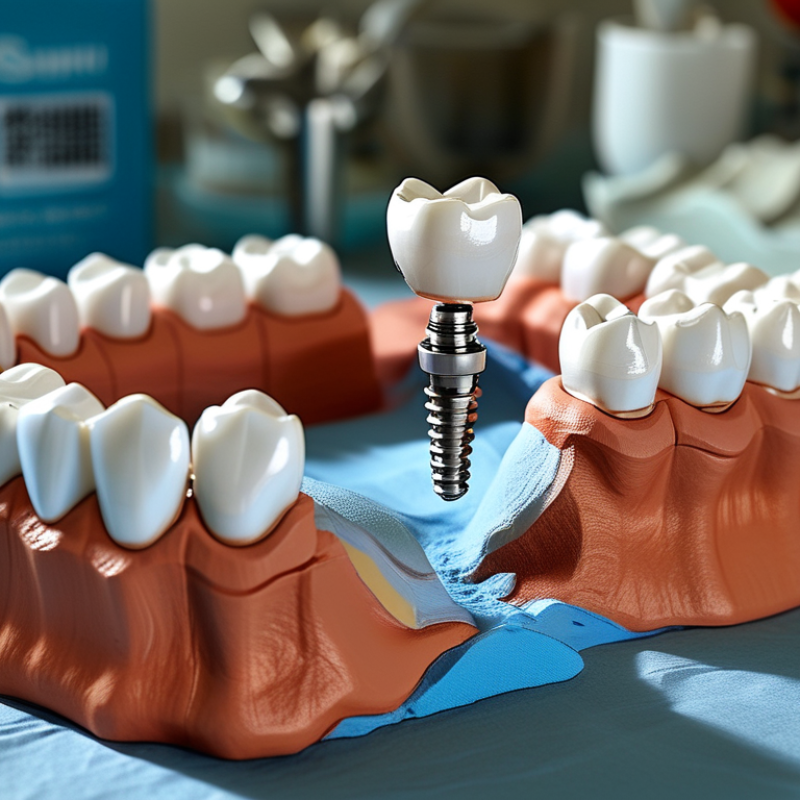
What Is the Best Dental Implant System in China?
The answer should begin with evidence, not marketing. A systematic review by Pjetursson and colleagues in Clinical Oral Implants Research reported approximately 97% implant survival after five years for implant-supported fixed restorations. A separate 10-year review, published in the International Journal of Oral and Maxillofacial Surgery, found survival near 94.6%. These figures exceed 90%, but they are averages, not guarantees.
“Best” also depends on patient selection, surgical planning, bone quality, loading protocols, and maintenance. The system should have traceable components, clear clinical documentation, and compatible restorative parts. For a Wholesale Dental Implant System, buyers should request independent survival data, not only laboratory test results. Check whether studies describe real patients, follow-up duration, smoking status, and implant failure definitions. Small details matter.
Tips: Compare five- and ten-year survival separately. Ask for peer-reviewed evidence. Review complication rates, not survival alone. A high survival rate can hide loose screws, bone loss, or difficult repairs. I would also examine local clinician training and after-sales component availability. This step is often overlooked. Even strong data may not predict every clinical setting.
Choosing the best China Dental Implant System requires more than comparing prices or surface design. NMPA registration confirms that a device has passed China’s regulatory review. For implants, this generally means Class III medical-device registration, not a casual “certification” label. Buyers should verify the registration number in the official NMPA database.
Clinical evidence matters more than paperwork alone. The WHO Global Oral Health Status Report 2022 estimates that oral diseases affect nearly 3.5 billion people worldwide. China’s Fourth National Oral Health Survey also reported widespread adult caries and periodontal disease. These findings show why implant treatment needs careful diagnosis, not only a certified product. Look for controlled clinical studies, follow-up beyond five years, implant survival rates, marginal bone changes, and complications. Industry literature often reports five-year survival above 95% in selected patients, but those results cannot be transferred blindly to every case. Real patients are less tidy.
Tips: Ask for the exact NMPA registration certificate, approved indications, and evidence for the implant’s surface and connection design. Check whether studies involve Chinese patients and routine clinical settings. A missing long-term dataset is not proof of failure, but it is a reason to remain cautious. The surgeon’s training, maintenance plan, and sterilization procedures also influence outcomes. A strong system can still perform poorly when planning is rushed.
What Is the Best Dental Implant System in China?
Choosing a dental implant system in China should begin with material evidence, not advertising claims. Titanium grade affects strength, corrosion resistance, and tissue response. Commercially pure titanium, especially Grade 4, offers strong biocompatibility and practical corrosion resistance. Titanium alloys, such as Grade 5, usually provide higher mechanical strength. However, stronger does not automatically mean better for every clinical situation. Implant diameter, connection design, and bone quality also influence performance.
Surface treatment deserves close inspection. Grit blasting and acid etching can create microscopic roughness, helping blood clot formation and early bone contact. Anodizing may alter surface chemistry and color, while calcium-phosphate coatings can support initial mineral interaction. These treatments require controlled cleaning and stable production processes. Residual particles or uneven roughness may create concerns. Small details matter.
ISO 14801 fatigue testing offers a useful comparison between implant designs. The test applies repeated loading to an Implant And Abutment assembly under defined conditions. Engineers monitor deformation, fracture, and the number of cycles endured. Look for reports identifying the tested diameter, angulation, load level, and worst-case configuration. A passing result demonstrates mechanical endurance under laboratory conditions. It does not prove long-term clinical success. Fatigue testing can also miss patient-specific factors, including bruxism, infection, and changing bone density. I would ask for complete test data, not only a certificate image. That extra step is easy to overlook.
Choosing the best dental implant system in China requires more than comparing prices or marketing claims. Clinical evidence, surgical experience, component quality, and long-term maintenance matter equally. I would not call any system universally best. Patient bone density, smoking history, diabetes control, and oral hygiene can change outcomes significantly.
A Morse Taper Implant System may provide a stable internal connection and reduce micro-movement around the implant. However, it cannot eliminate peri-implantitis. Research reports different rates because studies use different definitions, follow-up periods, and patient groups. Bleeding during probing, swelling, suppuration, and progressive bone loss deserve careful review. A trained clinician should compare baseline and follow-up radiographs, especially near the implant neck.
Bone remodeling during the first year can be normal, but continuing loss is concerning. Common complications include mucositis, screw loosening, crown fracture, poor osseointegration, nerve irritation, and sinus-related problems. Maintenance is not optional. Professional cleaning and regular probing help identify small changes before discomfort appears. Some clinical reports look impressive, yet real-world records may be incomplete. That deserves reflection. A second opinion is sensible when bone loss progresses, symptoms persist, or treatment planning feels rushed.
What Is the Best Dental Implant System in China?
The best implant system depends on the dentist, not only the implant itself. The WHO Global Oral Health Status Report 2022 estimates that oral diseases affect nearly 3.5 billion people worldwide. China therefore needs trained clinicians who can manage varied bone conditions, medical histories, and patient expectations.
Check structured training, supervised cases, and current surgical volume. There is no universally accepted annual implant threshold. Still, regular placement and restoration experience usually improves practical judgment. Ask how many similar cases the dentist completed recently. A molar case with limited bone is very different from a simple front-tooth case. Look for documented planning, informed consent, complication management, and long-term reviews.
Digital planning should connect CBCT scans, intraoral scans, prosthetic design, and surgical guides. It should not become decoration. A systematic review in Clinical Oral Implants Research reported average computer-guided deviations near 1 millimeter, although outcomes varied between studies. The ITI consensus reports also stress that digital workflows require training and clinical control. At the consultation, ask whether the guide was checked for seating, whether the planned emergence profile is realistic, and how the bite will be verified. A beautiful screen image can still produce a poor crown. That weakness deserves honest discussion. Postoperative photographs, maintenance records, and radiographs taken over time often reveal more than a brochure.
There is no universally best dental implant system. In China, the most reliable choice is generally the system supported by appropriately trained clinicians, consistent surgical experience, accurate diagnosis, and a well-controlled digital treatment workflow.
| Assessment Dimension | Key Data Point | Practical Evaluation Benchmark | Why It Matters | Suggested Weight |
|---|---|---|---|---|
| Formal Implant Training | Postgraduate education, verified continuing education, and supervised implant cases | Prefer documented training in implant surgery, prosthodontics, anatomy, infection control, and complication management | Training reduces avoidable diagnostic, surgical, and restorative errors | 20% |
| Recent Surgical Volume | Number and type of implant placements completed during the previous 12 months | Review actual case records rather than relying only on years in practice; assess routine, immediate, esthetic-zone, and bone-deficiency cases separately | Current procedural volume is more relevant than historical experience alone | 20% |
| Case Selection and Risk Assessment | Evaluation of periodontal status, bone volume, occlusion, systemic health, smoking, and medication history | A written treatment plan should identify contraindications, risk factors, alternatives, and maintenance requirements | Appropriate case selection strongly influences implant survival and biological health | 15% |
| Three-Dimensional Imaging | Use of cone-beam computed tomography when two-dimensional imaging is insufficient for diagnosis or planning | The imaging protocol should be justified by the case, use the lowest practical radiation exposure, and include documented interpretation | Three-dimensional imaging helps assess bone anatomy and proximity to important structures | 10% |
| Digital Treatment Planning | Integration of three-dimensional imaging, digital impressions, restorative design, and surgical planning | The plan should be prosthetically driven, documented, reviewable, and adjusted to the patient’s anatomy and occlusion | Implant position should support function, hygiene, soft-tissue stability, and final restoration design | 15% |
| Guided Surgery and Surgical Control | Use of static guides, dynamic navigation, or conventional freehand surgery according to clinical indication | Guided surgery should be used selectively; the clinician must also be capable of managing deviations and complications | Digital guidance can improve transfer of the plan but does not replace clinical judgment | 8% |
| Implant-System Documentation | Traceability, surgical instruments, restorative components, instructions, and regulatory documentation | Confirm that the selected system has clear documentation, compatible components, and an established local service pathway | Long-term maintenance depends on component availability and accurate records | 5% |
| Long-Term Maintenance | Recall schedule, professional cleaning, home-care instruction, and monitoring of peri-implant tissues | A documented maintenance plan should include plaque control, occlusal review, radiographic monitoring when indicated, and management of risk factors | Maintenance is essential because peri-implant inflammation can compromise otherwise successful treatment | 7% |
| Total Evaluation Weight | 100% | |||
Note: The weighting percentages are a practical comparison framework, not official regulatory thresholds or a national ranking.
Choosing the best dental implant system in China requires more than comparing the lowest procurement price. A quotation may exclude surgical kits, healing components, shipping, taxes, training, and replacement parts. A One Piece Implant System can reduce component purchases, but its design may limit prosthetic flexibility in complex cases. Clinical indications matter more than a simple price table.
Warranty terms deserve careful reading. Confirm the coverage period, replacement process, documentation requirements, and exclusions for fractures or poor maintenance. Ask whether the supplier provides batch traceability and written technical support. A reliable distributor should explain these details clearly, not hide them in small print. In practice, vague warranty language can become an expensive delay.
Tips: Build a five-year cost sheet. Include the implant, instruments, storage, chair time, follow-up visits, and possible retreatment. Compare prices from several qualified suppliers, then request sample documentation and clinician training records. Do not assume a longer warranty guarantees better clinical performance. I may be overly cautious, but a cheaper purchase can become costly when one missing component interrupts treatment. Review the system with an experienced dental professional before ordering.
What Is the Best Dental Implant System in China?
Match Implant Systems to Bone Quality, Anatomy, and Patient Risk Factors
The best dental implant system in China is not a universal choice. A lower molar with dense bone may need a different design from an upper front tooth with a thin buccal plate. Cone-beam imaging, periodontal records, and a detailed medical history should guide selection. The label alone is insufficient.
Bone quality strongly affects stability and surgical planning. Soft bone may require a design that supports controlled insertion and early fixation. Narrow ridges may need smaller components, staged bone augmentation, or a different restorative approach. The sinus position, nerve canal, crown space, and implant angle also matter. Small anatomical details can change the plan.
Patient risk factors deserve equal attention. Smoking, uncontrolled diabetes, poor plaque control, previous gum disease, and some medications can increase complications. A clinician should review these risks before selecting an implant system, not after failure occurs. In China, hospitals and clinics should also confirm product registration, component traceability, training, and long-term service access. This is practical, not decorative.
Even experienced clinicians can misjudge bone density from imaging alone. Surgical findings may differ. A careful team should be willing to revise the plan when the bone feels softer than expected. Patients should ask about maintenance, prosthetic compatibility, and the clinician’s experience with similar anatomy. The most suitable system is the one that fits the patient, the operator, and the complete treatment plan.
Grand View Research’s dental implants market analysis projects continued global growth, supported by rising tooth loss, greater awareness of restorative care, and advances in implant design. MarketsandMarkets likewise forecasts strong expansion in the sector, reflecting increasing demand for predictable, minimally invasive, and digitally guided procedures. Against this background, Select Series Implant Systems address key clinical priorities through biocompatible titanium-alloy construction, precision manufacturing, and a range of implant dimensions designed for different bone conditions and restorative requirements.
Their versatility supports single-tooth replacement, multiple-unit restorations, and full-arch rehabilitation, while varied connection options help clinicians tailor treatment planning. The system’s guided surgical workflow and clear procedural protocols may improve handling efficiency, reduce operative complexity, and help limit patient discomfort. Advanced surface treatments and microstructural features are intended to enhance primary stability and encourage bone integration, factors closely associated with dependable healing and long-term function. Postoperative care and maintenance guidance further supports consistent follow-up, hygiene, and restoration management in everyday clinical practice.
: Strong five- and ten-year survival data provide a useful starting point. But averages are not promises. Patient selection, bone quality, surgical planning, loading, and maintenance also shape outcomes.
Review five-year and ten-year survival separately. Published reviews report approximately 97% survival after five years and 94.6% after ten years. Check failure definitions and follow-up periods carefully.
No. Class III medical-device registration confirms regulatory review, not guaranteed clinical success. Verify the registration number, approved indications, and supporting clinical evidence.
Look for real patients, longer follow-up, marginal bone changes, and complication rates. Smoking status and maintenance schedules also matter. Laboratory testing alone is insufficient.
Not usually. A quotation may exclude surgical kits, healing parts, shipping, taxes, training, or replacements. A low purchase price can become expensive later.
Check coverage periods, exclusions, documentation rules, and replacement procedures. Confirm written support and batch traceability. Vague wording may create costly delays.
No. It may reduce component purchases, but complex restorations can require greater prosthetic flexibility. Clinical indications should guide the decision.
Even strong evidence may not predict every clinic’s results. Surgeon training, sterilization, follow-up care, and component availability influence long-term performance. This is easy to overlook.
Include implants, instruments, storage, chair time, follow-up visits, and possible retreatment. Request several qualified quotations. I may be too cautious, but missing one small component can interrupt treatment.
Choosing the best Dental Implant System in China requires more than comparing prices or brand recognition. A reliable evaluation should begin with five- and ten-year implant survival rates above 90%, supported by transparent clinical evidence. Buyers should also verify NMPA registration, Class III certification, and compliance with relevant quality standards. Important technical factors include titanium grade, surface treatment, mechanical design, and ISO 14801 fatigue-testing results. Long-term success should be assessed through peri-implantitis rates, marginal bone loss, prosthetic complications, and maintenance requirements.
The most suitable system also depends on the clinical team. Dentist training, surgical experience, treatment volume, and digital planning capabilities can significantly affect outcomes. Procurement prices should be considered alongside warranty coverage, component availability, and lifetime treatment costs rather than initial expense alone. Finally, implant selection should match bone density, anatomical limitations, occlusal demands, healing capacity, and patient-specific risk factors. A balanced decision combines documented performance, regulatory status, clinical expertise, and personalized treatment planning.