Picking out the right Dental Crown Abutment isn’t exactly something to take lightly, especially if you're diving into restorative dental work in 2025. Thanks to all the new tech and materials coming out these days, patients now have way more options than they did before — it’s almost overwhelming! Basically, the abutment is the foundation that holds your crown in place, and it can really make a difference in how your smile looks and functions afterward. That’s why it’s super helpful to understand the different types out there so you can make choices that really match what you need and prefer.
As dentistry keeps getting better and more advanced, there are a few key things to keep in mind—like whether the material works well with your teeth, how long it’s expected to last, and whether it’ll fit just right. With all the innovations popping up, staying in the loop about the latest options can really make a difference for your results. This guide’s here to walk you through the important stuff so you can chat confidently with your dentist. In the end, choosing the right abutment means you’ll be happier with your dental work, plus it’ll help improve your oral health and boost your confidence for years down the line.
Understanding Dental Crowns and Abutments: An Overview
Dental crowns and abutments play a crucial role in restorative dentistry, providing both functional and aestheticbenefits to patients. A dental crown is a cap placed over a tooth to restore its shape, size, strength, and appearance, often used after a root canal or to support a damaged tooth. Abutments, on the other hand, are the connectors that secure dental prosthetics, such as crowns or bridges, to Dental Implants. Understanding these components is essential for choosing the most suitable option for your dental health needs.
When considering dental crowns, it's important to evaluate the materials available, such as porcelain, metal, or a combination of both. Each material has unique advantages regarding durability, appearance, and biocompatibility. Patients should also discuss their lifestyle and dental health with their dentist, as these factors can influence the best type of crown. For abutments, the choice largely depends on the specific dental Implant System being used and the overall treatment plan. Understanding how these elements work together can significantly impact both thefunctionality and longevity of the dental restoration.
Types of Dental Crown Abutments: Material and Design Options
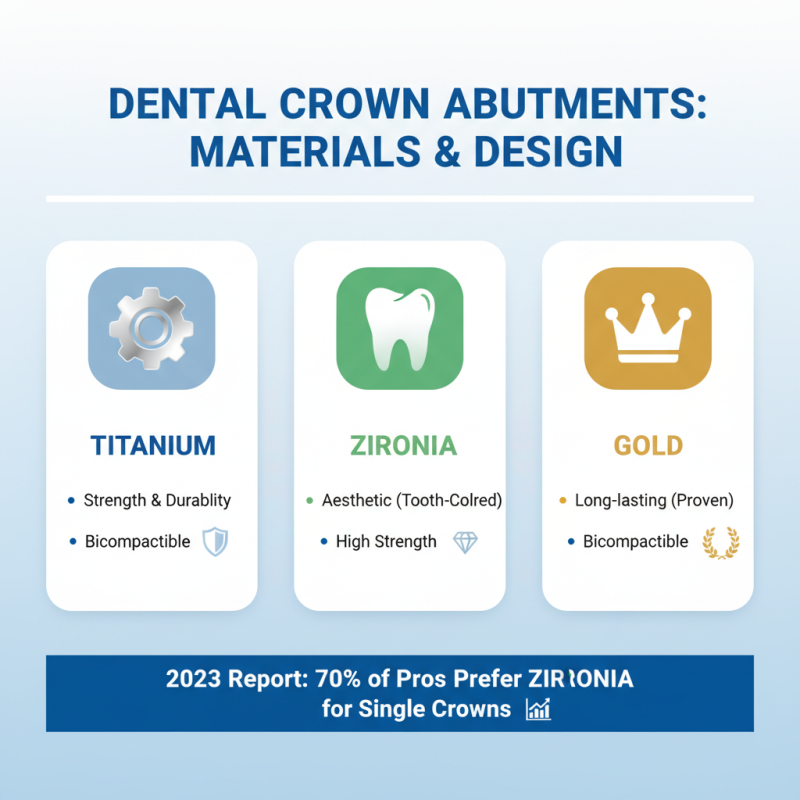
When selecting a dental crown abutment, understanding the various types of materials and design options is crucial for achieving optimal results. The most common materials used for dental abutments include titanium, zirconia, and gold. Titanium is favored for its strength, biocompatibility, and resistance to corrosion, making it an ideal choice for patients who prioritize durability. Zirconia, on the other hand, is highly aesthetic due to its tooth-like coloration, providing a natural appearance while still offering commendable strength. According to a 2023 industry report by the American Academy of Implant Dentistry, nearly 70% of dental professionals now prefer zirconia for single crowns due to its combination of aesthetics and strength.
Additionally, the design of the abutment plays a significant role in both function and aesthetic appeal. There are two primary designs: a straight abutment and an angled abutment. Straight abutments are typically used when there is optimal alignment between the implant and the crown, ensuring an efficient transfer of load. Angled abutments, however, allow for better alignment in cases where the implant placement may not be perfectly ideal. The same report highlights that innovative designs in abutments have improved clinical outcomes, suggesting that over 85% of practitioners report high satisfaction among patients with well-designed abutments, emphasizing the importance of choosing the right type for individual cases.
Factors to Consider When Choosing a Dental Crown Abutment
When choosing a dental crown abutment, several critical factors play a pivotal role in ensuring that the chosen option is optimal for the patient's specific needs. One of the primary considerations is the material of the abutment. Different materials, such as titanium, zirconia, and other alloys, offer varying levels of strength, aesthetic appeal, and biocompatibility. For instance, zirconia abutments are often preferred for anterior restorations due to their tooth-like appearance, while titanium is favored for its durability and ability to integrate well with bone.
Another essential factor is the design of the abutment, which should align with the overall treatment plan and the individual anatomy of the patient’s mouth. Factors like the angle of the implant, the space available for the crown, and the occlusal relationship need to be meticulously assessed. Custom abutments may provide a better fit and improved stability, especially in cases where the standard options do not provide adequate support or aesthetics. Additionally, consulting with a dental professional to evaluate the specific circumstances and goals of the treatment is crucial to ensure the selected abutment will enhance the longevity and functionality of the dental restoration.
Choosing the Right Dental Crown Abutment: Factors Considered in 2025
Evaluating Your Oral Health Needs for a Suitable Abutment
When considering the right dental crown abutment for your needs in 2025, it is essential to evaluate your oral health comprehensively. Begin by assessing the condition of your existing teeth and gums. Factors such as tooth decay, gum disease, and overall oral hygiene play a significant role in determining which type of abutment will best suit your dental restoration. A thorough examination by your dentist can provide insights into the structural integrity of your teeth, which will help in selecting an abutment that offers optimal support and longevity.
Additionally, take into account your individual dental alignment and bite dynamics. Structural issues or misalignments can affect the fit and functionality of a dental crown. Your dentist may recommend specific solutions based on how your teeth come together and how force is distributed during normal chewing functions. This personalized approach ensures that the abutment chosen not only fits well but also enhances your overall oral health and comfort, promoting a successful outcome for your dental restoration.
How to Choose the Right Dental Crown Abutment for Your Needs in 2025
| Abutment Type | Material | Best For | Longevity (Years) | Estimated Cost ($) |
| Titanium Abutment | Titanium | Patients with strong bone density | 10-15 | 300-500 |
| Zirconia Abutment | Zirconia | Aesthetic preference | 10-20 | 400-700 |
| Gold Abutment | Gold Alloy | Durability and strength | 15-25 | 600-900 |
| Titanium Base Abutment | Titanium with ceramic overlay | Versatile uses | 10-15 | 350-550 |
| Custom Abutment | Varied materials | Specific anatomical requirements | 10-20 | 800-1200 |
Consultation with Your Dentist: Key Questions to Ask
When considering a dental crown abutment, an essential first step is to have a detailed consultation with your dentist. To ensure the best outcome, you should prepare a list of key questions to ask during your appointment. Start by inquiring about the different types of abutments available and how each option aligns with your specific dental needs. Understanding the materials used and their longevity can significantly impact your long-term dental health and aesthetic satisfaction.
Additionally, it's crucial to discuss the procedural aspects and what you can expect before, during, and after the installation. Ask your dentist about the expected recovery time, potential discomfort, and any necessary follow-up appointments. Engaging in a thorough dialogue about these factors not only helps you feel more at ease but also facilitates informed decision-making regarding the choice of your dental crown abutment. Exploring your concerns and preferences during this consultation can lead to a customized solution that best supports your oral health goals in 2025 and beyond.
Future Trends in Dental Crown Abutments by 2025
As we look ahead to 2025, the landscape of dental crown abutments is evolving rapidly, driven by advancements in technology and materials science. One of the most notable trends is the increasing use of biocompatible materials that enhance the integration of the crown with the surrounding tissue. This shift not only improves patient comfort but also promotes better long-term health of the implant site. The introduction of innovative materials like zirconia and lithium disilicate offers dentists more options to match the color and translucency of natural teeth, creating aesthetically pleasing results for patients.
Moreover, the digital revolution is significantly influencing the design and production of dental crown abutments. With the advent of CAD/CAM technology, dental professionals can create highly precise, customized abutments tailored to individual patient needs. Additionally, this technology streamlines the manufacturing process, reducing turnaround times and improving the overall efficiency of dental practices. As such, patients can expect faster treatments while still receiving crowns that are not only functional but also visually appealing.
By 2025, these advancements will likely lead to a more streamlined patient experience, making dental care not only more efficient but also more approachable for many individuals.
Cost Considerations and Insurance Coverage for Dental Crowns
When considering a dental crown, understanding the cost implications and insurance coverage is essential for making an informed choice. On average, the price for dental crowns can range from a few hundred to over a thousand dollars, depending on the material used, the complexity of the procedure, and the geographic location of the dental practice. High-quality materials like porcelain and zirconia may be more expensive, but they often provide better durability and aesthetics. Patients should always discuss the potential costs with their dentist to understand the specific expenses involved.
Insurance coverage for dental crowns can also vary significantly among different plans. Some insurance providers may cover a portion of the costs, especially if the crown is deemed medically necessary following a disease or injury. However, aesthetic crowns—those chosen purely for cosmetic reasons—might not be covered at all. It’s crucial to review the details of your insurance policy, including any deductibles and co-pays that apply.
Additionally, some dental practices offer financing options or payment plans, making it easier for patients to manage their expenses while receiving necessary dental care.
FAQS
: A dental crown is a cap placed over a tooth to restore its shape, size, strength, and appearance, commonly used after a root canal or to support a damaged tooth.
Abutments are connectors that secure dental prosthetics, such as crowns or bridges, to dental implants, providing stability and support for these restorations.
When choosing a dental crown, consider the materials available (porcelain, metal, or a combination), along with your lifestyle and dental health, as these can influence the best type of crown for you.
Assess the condition of your existing teeth and gums, including any tooth decay or gum disease. A thorough examination by your dentist will provide insights into the best type of abutment for your dental restoration.
Dental alignment and bite dynamics can affect the fit and functionality of a dental crown, so choosing an abutment that accommodates these factors promotes optimal support and comfort.
Common materials for dental crowns include porcelain and metal. Each material offers unique benefits regarding durability, appearance, and biocompatibility.
Yes, your lifestyle and dental health can impact which type of crown material is best suited for you, so it is essential to discuss these factors with your dentist.
A personalized approach ensures that the chosen abutment fits well and enhances overall oral health and comfort, leading to a successful outcome for the dental restoration.
Conclusion
In 2025, selecting the right Dental Crown Abutment is crucial for ensuring optimal oral health and functionality. Understanding the different types of crown abutments, including their material and design options, is essential in making an informed decision. Factors such as the specific oral health needs, potential aesthetic considerations, and future dental trends should all be evaluated during the selection process.
It's equally important to have a thorough consultation with your dentist to discuss any key questions regarding the abutment choice, as well as to understand the cost implications and insurance coverage associated with dental crowns. By taking these steps, patients can achieve the best outcomes for their dental restorations while ensuring a harmonious fit with their overall dental care plan.