Inquiry
Form loading...
0%

Finding a trustworthy Subperiosteal Implant supplier isn’t just about comparing prices or browsing polished websites. You really want to see how much experience they have in clinical settings, their engineering skills, and whether they’re consistent with quality checks. Don’t hesitate to ask for documented traceability of their materials, detailed manufacturing records, sterilization processes, and how they verify their designs. These details become super important when you’re dealing with a custom framework that needs to follow a patient's uneven jawbone perfectly.

Dr. Carl E. Misch, a well-known expert in Dental Implants, always stressed that “the key to success is proper diagnosis and treatment planning.” That advice definitely applies here too. Any good supplier should be willing to chat with the surgeon, review 3D images, and explain how their implant design matches the patient’s bone structure. Big names like Zimmer Biomet and Nobel Biocare have solid quality systems, but at the end of the day, each product still needs to be judged on its own merits. Just because a brand is famous doesn’t automatically mean it’s the right fit.

Take a close look at their case history—are their clinical examples recent and detailed? Do they provide follow-up results? And can they walk you through their CAD/CAM workflows without confusing you with too much jargon? Reliable suppliers are transparent, ready to answer your questions quickly, and can set realistic expectations about delivery times. They should also be upfront about any manufacturing limitations.

Honestly, no supplier is perfect. And that’s okay. But signs like rushing reps, vague certificates, or pressure to make quick decisions should raise a red flag. Some companies might show off shiny prototypes but then fall short when it comes to support after delivery. That’s where experience really comes into play. It’s worth talking to other surgeons who’ve used their systems, checking if the supplier is officially authorized in your region, and getting everything in writing. It might slow things down a little initially, but in the long run, it’s all about protecting your clinical judgment and building patient trust."
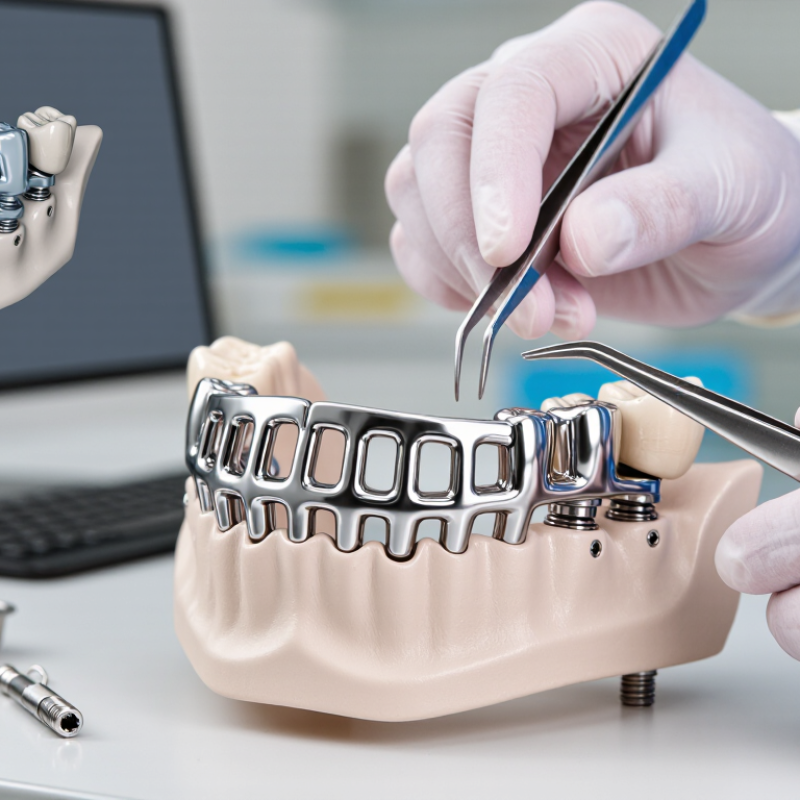
How to Find a Reliable Subperiosteal Implant Supplier?

Define Your Clinical and Technical Requirements

How to Find a Reliable Subperiosteal Implant Supplier?

Define Your Clinical and Technical Requirements

A reliable supplier search should begin with the patient, not a product catalogue. Define the intended treatment area, bone condition, soft-tissue limits, and expected loading demands. Review recent CBCT scans with the surgical and restorative teams. Small anatomical details matter, especially near the sinus, nerve canal, or thin cortical bone.

Write these requirements down.

Your specification should include implant material, framework design, fixation points, surface treatment, and manufacturing tolerances. Ask whether the supplier supports patient-specific CAD planning and secure file exchange. Clarify the required scan format, design approval steps, production timeline, and revision policy. For a Wholesale Subperiosteal Implant program, also confirm packaging, batch traceability, inspection records, and consistent production capacity.

Do not rely on attractive samples alone. Request material certificates, dimensional inspection reports, biocompatibility documentation, and evidence of quality-system control. The supplier should explain how they manage design changes and manufacturing deviations. In practice, unclear communication causes more delays than machining itself. I have seen teams approve a design before confirming fixation access. That mistake can become expensive. A careful supplier will welcome clinical questions, document each decision, and admit when a requested design needs further review. Something may look perfect on screen, yet feel impractical during surgery.

Verify the Supplier’s Qualifications and Manufacturing Standards

A reliable China Subperiosteal Implant supplier should provide clear evidence of qualifications, not only attractive product photos. Request the company’s business licenses, medical device registrations, and quality management certificates. Check whether the certificates match the legal manufacturer and production address. Details matter.

Manufacturing standards deserve close attention. Ask how titanium materials are sourced, tested, and documented before production. Material certificates should identify the alloy grade and batch number. Review records for computer-aided design, dimensional inspection, surface treatment, packaging, and sterilization. A responsible supplier can explain each step without vague promises. Ask for sample inspection reports. Compare the documented measurements with the actual implant and its packaging.

I also look for traceability during supplier evaluations. Can the factory connect a finished implant to its material batch, operator, inspection results, and shipment record? Can it show procedures for handling complaints and correcting defects? These answers reveal practical experience. An audit may include a clean production area, calibrated instruments, and workers following written procedures. Still, one visit cannot prove everything. I would contact qualified clinical or regulatory professionals before making a purchasing decision. Certificates can expire. Documents can be incomplete. Keep asking questions.

How to Find a Reliable Subperiosteal Implant Supplier?

Verify the supplier’s qualifications and manufacturing standards against current internationally recognized medical-device standards.

The chart shows the publication year of key standards commonly used when evaluating medical-device suppliers. A reliable supplier should be able to provide applicable certificates, risk-management records, biocompatibility evidence, labeling controls, and documented quality-management procedures aligned with the relevant standards.

Assess Subperiosteal Implant Design and Customization Options

A reliable Subperiosteal Implant supplier should explain how each framework is designed, not merely show polished photographs. The process should begin with high-resolution CBCT data, clinical examination, and verified impressions when needed. Engineers should document bone contours, soft-tissue clearance, fixation points, and loading direction. A generic frame may look efficient, but it can create pressure zones and unstable seating. That risk deserves scrutiny.

Customization should include titanium selection, framework thickness, strut placement, screw positioning, and surgical-guide compatibility. Ask whether the supplier provides editable design files, dimensional inspection records, and revision procedures before manufacturing. ISO 13485-based quality systems are useful evidence, but certification alone does not prove clinical suitability. Review sample design reports. Look for tolerances, scan quality checks, and traceability from patient data to finished device. Small details matter.

The World Health Organization’s Global Oral Health Status Report estimates that oral diseases affect nearly 3.5 billion people worldwide, increasing demand for dependable restorative solutions. Yet demand should not encourage rushed customization. A supplier should distinguish a subperiosteal framework from adjunctive products, including a Dental Implant Bone Graft Membrane, because they serve different clinical purposes. Confirm sterilization validation, material certificates, and post-manufacturing inspection. One scan is not always enough. Movement artifacts or incomplete anatomy can distort the design. In my experience, transparent revision discussions reveal more than impressive claims. Perfect digital planning is unlikely. A careful supplier admits uncertainty and corrects it before surgery.

Review Material Safety, Testing, and Regulatory Compliance

How to Find a Reliable Subperiosteal Implant Supplier?

Material safety should guide supplier selection, not catalogue appearance. Ask for the implant alloy, surface treatment, and complete material traceability. Titanium or cobalt-chromium documentation should identify composition, batch number, and manufacturing location. Testing should cover cytotoxicity, sensitization, irritation, and systemic toxicity under ISO 10993. Mechanical testing also matters, especially fatigue, deformation, and fixation stability. A clean test report is useful. It is not enough.

ISO’s 2023 Survey recorded more than 26,000 ISO 13485 certificates worldwide. This figure shows broad adoption, but certification alone does not prove reliable performance. During supplier reviews, request the actual certificate scope, recent audit findings, corrective-action records, and change-control procedures. For patient-specific implants, verify CT-data handling, dimensional inspection, sterilization validation, and packaging integrity. FDA and EU requirements also expect post-market surveillance, complaint handling, and traceable records. The details often reveal weaknesses.

Tips: Ask for reports from accredited laboratories, not only supplier summaries. Check whether testing covers the final finished implant. Confirm regulatory status for your target market. Review sample labels and UDI records. I would also inspect one production batch personally, if possible. A polished document can still hide inconsistent processes. That is uncomfortable, but worth remembering. Keep communication records, because assumptions become expensive when revisions are needed.

Evaluate Digital Workflow, Communication, and Production Support

How to Find a Reliable Subperiosteal Implant Supplier?

A reliable supplier should support the entire digital workflow, not only sell components. The WHO Global Oral Health Status Report estimates that nearly 3.5 billion people live with oral diseases. This demand increases pressure on implant teams and production partners. Ask how scan files are received, checked, stored, and transferred. Confirm accepted formats, revision procedures, and approval records. Clear answers matter.

Communication is a production control. Your supplier should provide one technical contact, written timelines, and rapid responses when anatomy changes. Ask for a sample case review. A good team can explain how bone data guides subperiosteal framework design. It should also document material certificates, inspection points, and traceability for every Dental Implant Healing Abutment. ISO 13485 principles are useful here, especially risk control and documented processes. Do not accept vague promises.

Production support reveals practical experience. Request examples of digital planning reports, fit verification, and remake handling. A 2023 systematic review in Clinical Oral Implants Research found that digital workflows can improve efficiency, but results still depend on operator skill and case complexity. That limitation deserves attention. Digital is not automatically better. Sometimes, a supplier’s portal feels impressive but delays a simple correction. Test the workflow with a controlled case before committing. Review response times, file accuracy, packaging details, and post-delivery support. Small failures become expensive quickly.

How to Find a Reliable Subperiosteal Implant Supplier? - Evaluate Digital Workflow, Communication, and Production Support
Evaluation Area Key Dimension Recommended Verification Point Practical Procurement Benchmark Evidence to Request
Quality Management Medical-device quality system Confirm that the supplier operates a quality management system covering the design and manufacture of custom medical devices. Current ISO 13485 certification with a scope relevant to patient-specific implants and manufacturing activities. Valid certificate, certification scope, issuing body, expiry date, and audit status.
Regulatory Control Market-specific compliance Verify that the supplier can support the regulatory requirements of the destination market and intended clinical use. Documented regulatory pathway, technical documentation support, and applicable establishment or device registrations where required. Regulatory checklist, device classification rationale, registration records, and market-specific submission support process.
Digital Workflow Input-file compatibility Check whether the supplier can securely receive and process medical imaging and 3D design files. Written acceptance criteria for DICOM data, STL or equivalent surface meshes, case identifiers, and file-size limits. File-submission guide, sample anonymized workflow, upload instructions, and data-integrity checks.
Digital Workflow Segmentation and planning control Ensure that image segmentation, anatomical reconstruction, implant positioning, and fixation planning are documented and reviewable. A defined review sequence from image import through surgeon approval, with recorded revisions at every major design change. Anonymized planning report, revision history, design-review checklist, and approval record.
Digital Workflow Surgeon approval process Confirm that production cannot begin before the authorized clinical team approves the final design. Formal approval of the final implant CAD model, surgical plan, fixation layout, and critical dimensions before manufacturing release. Electronic approval form, release status, version-controlled CAD files, and change authorization procedure.
Communication Response and escalation process Evaluate how the supplier handles technical questions, urgent case changes, and manufacturing risks. Named technical contact, defined escalation route, and a written response target of one business day for routine case questions. Communication protocol, escalation matrix, contact list, and sample case-status reports.
Communication Case-status visibility Determine whether the customer can track each case from file receipt to shipment. Status milestones for file review, design development, approval, production, inspection, sterilization if applicable, and dispatch. Portal screenshots or sample tracker, milestone definitions, and notification rules.
Material Control Implant material specification Verify that the titanium alloy or commercially pure titanium grade is specified and traceable. Material grade selected for the intended use and supported by a material certificate; common implant-grade references include ASTM F67 or ASTM F136 where applicable. Material certificate, heat or lot number, chemical composition, mechanical-property data, and supplier traceability records.
Production Additive or subtractive manufacturing control Review machine qualification, process validation, operator competence, and production parameter control. Documented manufacturing procedures, equipment maintenance, process monitoring, and controlled build or machining records. Process validation summary, equipment qualification records, maintenance logs, and batch or build reports.
Production Dimensional and geometric inspection Confirm that the finished implant is checked against the approved digital design. Inspection of critical dimensions, fixation-hole locations, mating surfaces, thickness, and overall geometry against predefined tolerances. Dimensional inspection report, measurement method, calibrated-equipment records, and acceptance criteria.
Surface and Cleaning Surface condition and cleanliness Assess control of surface treatment, residual powder or debris, oils, particles, and other contaminants. Validated cleaning and surface-treatment procedures with defined acceptance criteria and documented final inspection. Cleaning validation summary, surface-treatment records, particle or residue inspection results, and release checklist.
Biocompatibility Biological evaluation support Check whether the supplier can provide documentation for biological safety evaluation of patient-contacting materials and processes. Risk-based biological evaluation aligned with ISO 10993 and supported by material, process, residue, and contact-duration information. Biological evaluation report, material declarations, process-residue assessment, and applicable test reports.
Sterilization Sterile product controls If the implant is supplied sterile, verify that the sterilization method, packaging, and release process are validated. Validated sterilization process appropriate to the product, with a sterility assurance level commonly targeted at 10-6 for terminally sterilized medical devices. Sterilization validation summary, cycle records, biological or physical monitoring records, and release documentation.
Packaging Packaging integrity and shelf life Confirm that packaging protects the implant during transport and maintains the required condition until use. Packaging validation and integrity testing consistent with ISO 11607 when sterile-barrier packaging is used. Packaging validation report, seal or closure inspection records, transport testing, labeling, and shelf-life rationale.
Traceability Case, material, and production records Assess whether each implant can be traced from patient case and design approval through material, production, inspection, and shipment. Unique case identifier linked to design version, material lot, manufacturing batch or build, inspection results, and final release. Device history record, traceability matrix, lot-control procedure, and retention-period policy.
Production Support Lead-time reliability Separate design-approval time, manufacturing time, inspection time, and shipping time when evaluating delivery promises. Written lead-time quotation beginning after complete file receipt and final design approval, with notification rules for delays. Lead-time policy, recent anonymized delivery statistics, capacity plan, and delay-escalation procedure.
Production Support Nonconforming product control Review how the supplier handles failed inspections, design errors, production deviations, and rework. Documented nonconformance process with segregation, investigation, disposition approval, and corrective-action records. Nonconformance procedure, sample corrective-action report, rework authorization form, and complaint-escalation workflow.
Data Security Protection of patient and case information Confirm that patient-identifiable data is minimized, protected during transfer, and accessible only to authorized personnel. Encrypted file transfer, role-based access, audit logs, retention controls, and a documented privacy incident process. Data-security policy, access-control description, encryption details, backup policy, and data-processing agreement where applicable.
After-Sales Support Technical and clinical case support Evaluate support for surgical planning questions, documentation requests, product complaints, and post-delivery issues. Named technical support contact, complaint intake process, documented investigation workflow, and defined response milestones. Support policy, complaint form, investigation timeline, contact details, and post-market surveillance procedure.
Supplier Decision Scored qualification outcome Use a consistent scoring method instead of selecting a supplier based only on price or quoted lead time. Approve only suppliers that meet all critical requirements for regulatory control, design approval, material traceability, inspection, and data security. Completed supplier questionnaire, weighted scorecard, risk assessment, corrective-action list, and approval decision record.
The benchmarks in this matrix are procurement evaluation criteria based on commonly used medical-device quality, biological-safety, sterilization, packaging, and material-control principles. Final requirements should be confirmed for the specific implant design, clinical indication, manufacturing method, and destination market.

Compare Pricing, Lead Times, Warranty, and After-Sales Service

How to Find a Reliable Subperiosteal Implant Supplier?

Price deserves careful comparison, not automatic selection. Ask for a detailed quotation covering design, manufacturing, inspection, packaging, and shipping. A lower unit price may exclude essential services. Cheap is not always cheap. My own comparison mistake was ignoring revision-related support costs. That error changed the final budget significantly. Request a written breakdown and confirm whether taxes or customization fees apply.

Lead time should be measured from approved case files to delivery, not from the first inquiry. Ask how long planning, design approval, production, and quality inspection usually take. Reliable suppliers should explain possible delays clearly. Request recent delivery records or anonymized case timelines. A confident promise without evidence is weak. Also check whether urgent communication has a named technical contact. That gap matters during complex cases.

Warranty terms need precise language. Confirm coverage periods, exclusions, manufacturing defects, fit concerns, and replacement procedures. Ask who pays shipping and how quickly a claim is reviewed. After-sales service should include documentation, case follow-up, and practical communication with qualified clinical teams. It should not end when the package arrives. Verify material certificates, traceability records, and quality-control procedures before ordering. I would also test response speed with several detailed questions. Slow replies before payment may become slower after delivery. Good suppliers welcome reasonable scrutiny, although no supplier can eliminate every clinical or logistical risk.

FAQS

What should be defined before searching for a subperiosteal implant supplier?

Start with the patient’s anatomy, treatment area, bone condition, and soft-tissue limits. Review recent CBCT scans with surgical and restorative teams. Small details matter. Record fixation points, loading demands, material, framework design, and manufacturing tolerances.

Which technical details should a supplier confirm?

Ask about patient-specific CAD planning and secure file exchange. Confirm accepted scan formats, design approvals, production timelines, and revision policies. Also discuss packaging, batch traceability, inspection records, and production capacity. A polished sample proves little.

What documents should a reliable supplier provide?

Request material certificates, dimensional inspection reports, biocompatibility documents, and quality-system records. Certificates should identify the alloy grade and material batch. Check the legal manufacturer and production address. Documents may be incomplete or outdated.

How can manufacturing quality be evaluated?

Ask how materials are sourced, tested, machined, inspected, surface-treated, packaged, and sterilized. Request sample inspection reports. Compare recorded measurements with the actual implant and packaging. Calibrated instruments and written procedures are useful evidence.

Why is traceability important for custom implants?

Traceability should connect each implant with its material batch, operator, inspection results, and shipment record. Ask how complaints, defects, and manufacturing deviations are handled. This supports investigation and corrective action. One factory visit cannot prove everything.

What should be checked in the digital workflow?

Confirm how scan files are received, checked, stored, and transferred. Ask for written revision procedures and approval records. The supplier should explain how bone data guides framework design. Digital systems help, but they are not automatically better.

How should communication and production support be tested?

Request one technical contact, written timelines, and response expectations. Use a controlled case before making a larger commitment. Review file accuracy, correction speed, fit verification, packaging, and remake handling. Test the process first.

What warning signs suggest a supplier may be unreliable?

Be cautious when answers remain vague or depend only on attractive product images. Unclear fixation access can create surgical problems later. A supplier should document decisions and acknowledge design limitations. Perfect screens can mislead.

Conclusion

Finding a reliable Subperiosteal Implant supplier requires more than comparing prices. Begin by defining your clinical objectives, patient-specific requirements, imaging resources, and preferred surgical workflow. Then evaluate each supplier’s professional qualifications, manufacturing capabilities, quality management systems, and experience with customized implant production. A dependable supplier should offer clear information about implant design, digital planning, customization options, material safety, testing procedures, and applicable regulatory documentation.

Communication and production support are equally important. Confirm whether the supplier can manage digital files efficiently, provide design feedback, maintain accurate records, and meet agreed production timelines. Before making a decision, compare quotations alongside lead times, revision policies, warranty coverage, technical assistance, and after-sales service. The best choice is not necessarily the lowest-cost option, but the supplier that consistently demonstrates quality, transparency, responsiveness, and the ability to support your clinical team throughout planning, manufacturing, and follow-up.
Aria

Aria

Aria is a dedicated marketing professional at Zhejiang Zhuoshiyou Medical Equipment Co., Ltd., where she leverages her extensive knowledge of the company's products to drive effective communication and engagement. With a strong background in medical technology, Aria possesses a deep understanding......
Previous 2026 Top Denture Implants Suppliers for Global Buyers