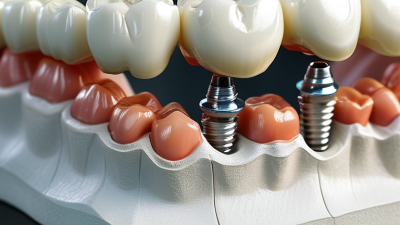
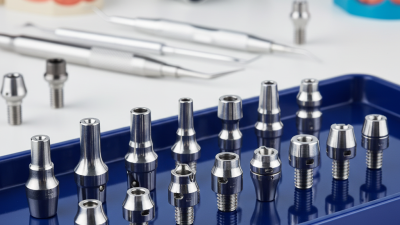
When it comes to choosing the top 10 Dental Crown Abutmentoptions for global buyers, it all starts with a pretty simple but important question: which abutment actually fits the clinical situation, the Implant System, and the overall restoration workflow? I mean, price isn't everything here. You’ve got to think about things like the material, connection shape, angulation, how far the gum tissue extends, and whether the manufacturer’s quality controls check out. Even a tiny mismatch can cause issues — things like instability, poor gum emergence, or headaches when it’s time to do maintenance.
Dr. Carl E. Misch, who’s pretty much a pioneer in implant dentistry, once said, “The goal of implant dentistry is to bring the patient back to normal function, looks, speech, and health.” That’s a rule of thumb that still applies when picking out dental crown abutments. Titanium Abutments are often a solid choice when strength and reliable connections matter. Zirconia, on the other hand, might blend in better visually, especially around delicate gum tissue. Custom abutments? They can give you more control over how the crown emerges from the gum, which is especially handy in tricky front cases. But, just knowing the material isn’t enough — success depends on the whole package.
So, pay close attention.
For buyers worldwide, it’s a good idea to check if the abutment is compatible with CAD/CAM systems, examine the surface finish, look at screw designs, and follow sterilization instructions. It’s also smart to ask for detailed drawings, batch records, and info on how they’ve been clinically tested. Make sure it works either with cement-retained or screw-retained crowns, depending on what you need. While ISO 13485 certification can be a helpful sign of quality, it’s not a substitute for your own judgment or understanding of local regulations.
Honestly, no ranking out there is perfect. Gotta admit that. A more affordable abutment might work great in one case but not so well in another. This guide simply looks at ten common types from a buyer’s perspective, focusing on practical decision-making points rather than hype or promotional pitches. Usually, the best choice is the one that strikes a good balance — fitting well, working nicely with tissue, fitting smoothly into your workflow, and offering durability over the long haul.
Define the Top 10 Abutments by Material, Retention, and Angulation
Top 10 Dental Crown Abutment Types for Global Buyers
Define the Top 10 Abutments by Material, Retention, and Angulation
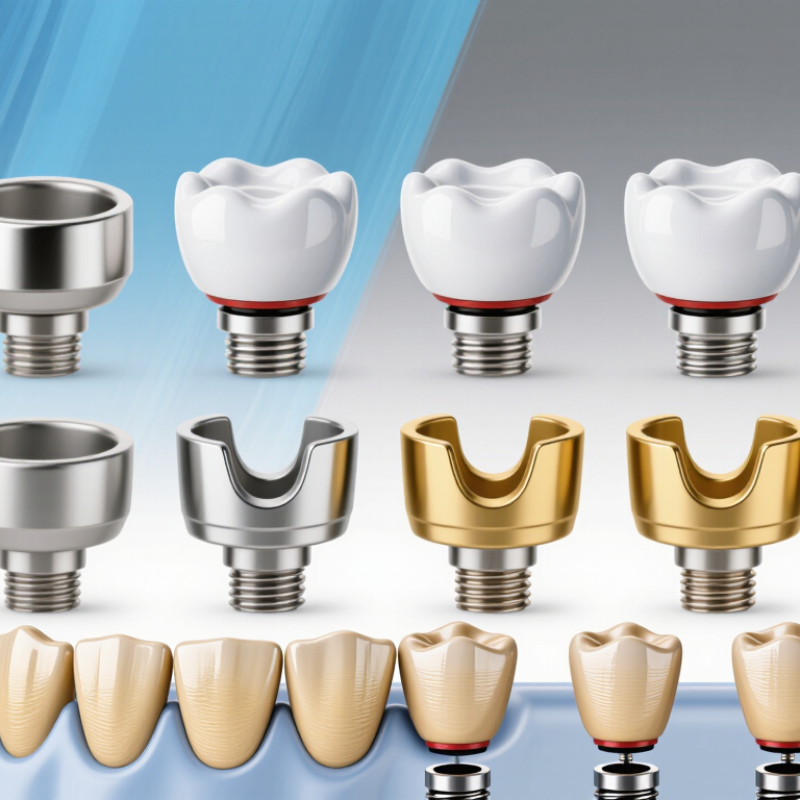
For global buyers, an abutment is not merely a connector. It shapes emergence, supports the crown, and transfers chewing forces. The ten main options are compared through material, retention, and angulation.
Titanium abutments offer high strength and predictable implant connections. Zirconia abutments provide tooth-like color near thin gingiva. Ceramic abutments can improve translucency, but fracture risk requires careful case selection. Noble-metal alloy abutments tolerate heat and heavy loading, although their appearance may limit anterior use.
Stock abutments are economical and readily available. Custom abutments allow patient-specific margins, contours, and implant positions. CAD/CAM production can improve repeatability, but fit still depends on scanning and machining accuracy.
Cement-retained abutments hide the access channel and support simple esthetic correction.
Screw-retained abutments permit retrievability and easier maintenance, yet the access opening requires careful occlusal planning. Fit still matters.
Straight abutments suit aligned implants and usually simplify laboratory work. Angled abutments redirect the prosthetic axis when implants diverge. Common angles range from 15 to 30 degrees, but surgical planning and clearance remain decisive.
These categories can overlap. A custom zirconia, screw-retained, angled abutment fits three definitions.
Buyers should verify connection geometry, torque limits, certificates, and sterilization instructions.
A low price can conceal poor documentation or inconsistent tolerances. I still question any selection made from a catalog image alone.
Compare Titanium, Zirconia, PEEK, and Gold Alloy Under ISO 10993
Choosing among the top 10 dental crown abutment types requires more than comparing prices or appearance. Titanium remains widely used because it offers strength, corrosion resistance, and a long clinical history. However, its gray color may show through thin gum tissue. Zirconia provides a tooth-like shade and can suit highly visible front teeth. It is stiff, though, and careless adjustment may create surface damage or fracture risk.
PEEK is lightweight and closer to bone in flexibility. It may help reduce stress in selected designs, but its lower stiffness demands careful crown support and connector planning. Gold alloy offers excellent casting accuracy and wear behavior. Its color and cost limit some applications. Allergic history also deserves attention.
ISO 10993 should guide the biological safety review for the finished abutment, not only the raw material. Testing may include cytotoxicity, sensitization, irritation, and chemical characterization, depending on contact type and duration. Dental Crown Abutment Manufacturers should provide traceable material data, processing controls, and risk-based test reports. Ask how polishing, cleaning, and sterilization affect the final surface. A rough margin can trap plaque beside a carefully selected alloy. No comparison is perfect. Patient anatomy, tissue thickness, implant connection, and clinician experience still change the outcome. I would not approve a material from a datasheet alone.
Assess Stock, Custom, and CAD/CAM Abutments Using 3 Fit Metrics
Top 10 Dental Crown Abutment Types for Global Buyers
Assess Stock, Custom, and CAD/CAM Abutments Using 3 Fit Metrics
Selecting a dental crown abutment requires more than checking availability. Global buyers should compare stock, custom, and CAD/CAM options through three fit metrics: interface precision, seating depth, and soft-tissue emergence. A stock abutment may ship quickly, but its preset angle can limit restoration design. Custom abutments offer better contour control, especially around thin gingival tissue. CAD/CAM abutments can deliver repeatable dimensions, provided the scan, design, and milling workflow remain accurate.
Interface precision is the first checkpoint. Confirm the implant connection, rotation control, and tolerance data.
Next, inspect seating depth with a verified model or digital measurement. Even a small mismatch can create a visible crown margin.
The third metric is emergence profile. Compare the abutment shape with the patient’s tissue thickness and crown contour. A perfect connection is not enough.
Tips: Ask each Dental Crown Abutment Manufacturer for inspection records, material certificates, and traceability details. Request sample measurements before placing a large order. Check whether custom files accept your laboratory’s preferred format. Also, review packaging and labeling for moisture, damage, and identification errors. Digital workflows look clean, but they can still carry flawed scans or incorrect design assumptions. That part is easy to overlook. Recheck critical dimensions independently.
Match Straight, Angled, and Multi-Unit Designs to 0°, 15°, and 30° Cases
Top 10 Dental Crown Abutment Types for Global Buyers
Match Straight, Angled, and Multi-Unit Designs to 0°, 15°, and 30° Cases
The World Health Organization’s Global Oral Health Status Report 2022 estimates that 2.5 billion people have untreated permanent-tooth caries. This burden supports continuing demand for dependable crown and implant components. Yet selection should begin with anatomy, not catalog numbers. A straight 0° abutment suits a nearly aligned implant and a clean screw-access path. It is simple, stable, and often easier to scan.
A 15° angled abutment can redirect access when an implant is slightly tilted. Check the facial contour carefully. A bulky emergence profile may irritate soft tissue or compromise esthetics. The 2023 International Team for Implantology consensus report stresses prosthetically driven planning, including implant position, restorative space, and load control. Small angular corrections matter. They are not cosmetic details.
For tilted posterior implants or full-arch restorations, multi-unit designs with 30° correction can improve a common path of insertion. Confirm interocclusal clearance, platform compatibility, and the final prosthetic height. Clinical reports often describe 17° or 30° options, so a requested “15°” may represent a supplier’s design convention. Verify the actual angle. This is where buyers can make mistakes. Material strength, tolerance testing, and documented quality systems also deserve review. A low price cannot correct poor passive fit. Sometimes, the best choice is less convenient but more forgiving.
Compare Cement- and Screw-Retained Abutments Using 10-Year Evidence
Choosing among the top 10 dental crown abutment types requires more than comparing catalog photos. For global buyers, the key decision is often retention: cement-retained or screw-retained. Ten-year clinical evidence shows that both options can remain functional when planning, fit, and maintenance are carefully controlled. Outcomes vary with implant position, soft-tissue thickness, occlusion, and patient hygiene. That matters. Cement-retained crowns can provide a clean appearance, especially when the screw channel would enter a visible surface. However, excess cement may remain below the gumline and contribute to peri-implant inflammation. Removal can also damage the restoration.
Screw-retained abutments offer easier retrieval for repair, inspection, or hygiene management. Their risks include screw loosening, access-channel visibility, and occasional component fracture. These problems often reflect poor torque control, inaccurate fit, or heavy biting forces rather than retention alone. The broader top-10 comparison may include stock, custom, angled, titanium, zirconia, temporary, CAD/CAM, multi-unit, tissue-level, and implant-level abutments. Each type changes the clinical balance. A Wholesale Dental Crown Abutment supplier should provide material data, dimensional tolerances, compatibility records, and traceable quality documentation. Ten years of evidence is valuable, but it does not answer every case. Clinicians still need radiographs, soft-tissue assessment, occlusal evaluation, and a realistic maintenance plan. I have seen attractive designs become difficult to service. Availability can also influence the safer choice.
Top 10 Dental Crown Abutment Types for Global Buyers
Cement- and Screw-Retained Abutments Compared Using 10-Year Evidence
Long-term clinical evidence generally shows comparable implant survival for cement- and screw-retained restorations. Screw-retained designs tend to have higher technical complication rates, while cement-retained designs may present greater biological risk when excess cement remains subgingivally.
The chart summarizes commonly reported 10-year outcome ranges from long-term systematic reviews and cohort studies. Outcomes vary according to implant position, restoration type, material, maintenance protocol, and patient risk factors. Abutment categories include stock titanium, custom titanium, zirconia, gold-alloy, CAD/CAM titanium, CAD/CAM zirconia, hybrid, multi-unit, angled, and temporary abutments.
Verify Suppliers Against ISO 13485, ISO 14801, and FDA Class II Rules
Selecting among the top ten dental crown abutment types requires more than comparing shapes, angles, or prices. Global buyers should examine the supplier’s quality system under ISO 13485. Request a valid certificate, issuing body details, scope, and expiry date. The scope should cover the supplied dental device, not unrelated products.
ISO 14801 evidence also deserves careful review. This standard evaluates endosseous dental implants under dynamic loading. It can reveal weakness in the implant-abutment connection. Ask for the tested configuration, worst-case dimensions, loading conditions, cycle count, and failure criteria. A polished report is not enough. Missing test details may signal weak technical control.
FDA Class II status needs equal attention. Confirm the product classification, applicable product code, and regulatory pathway. A 510(k) may apply, while some devices may qualify for an exemption. Do not treat FDA registration as product clearance. Check labeling, biocompatibility evidence, sterilization controls, complaint handling, and lot traceability. Each abutment should match approved drawings and material specifications. Small differences matter. An overlooked interface tolerance can affect seating, screw stability, and long-term performance. Supplier audits, sample measurements, and independent document checks add practical confidence. No review is perfect, but a cautious process reduces expensive surprises.
Rank Global Purchasing Costs Across Price, Fit, Lead Time, and Risk
Top 10 Dental Crown Abutment Types for Global Buyers
Global purchasing costs depend on more than the unit price. In my supplier reviews, stock titanium abutments usually rank highest for affordability and lead time. Healing abutments are also economical, but they do not support a final crown. Custom titanium offers better fit, though design fees and approval time increase costs. Zirconia provides strong esthetics for visible teeth. It costs more and needs careful handling. Cobalt-chromium remains durable, but machining and surface finishing can extend production.
Gold-alloy abutments often deliver excellent seating accuracy. Their material cost is high. Angled abutments solve difficult implant paths, yet they add planning risk. Multi-unit abutments suit full-arch cases and simplify restorative workflows. However, compatibility checks are essential. Temporary abutments are fast and inexpensive, but their clinical use is limited. CAD/CAM-compatible abutments can reduce adjustment work. File errors still create delays.
A practical ranking should score price, fit, lead time, and risk separately. Dental Crown Abutment Factories should provide material certificates, dimensional inspection records, and clear tolerance data. Ask for sample measurements, not only catalog claims. A 0.1-millimeter mismatch can cause chairside adjustments and shipping losses. Lead time also needs definition. Does it include design approval, machining, inspection, and dispatch? I have seen low quotations become expensive after revisions. That risk is easy to underestimate. Regional customs, packaging quality, and documentation can further change the final purchasing cost. Some suppliers communicate well, but their inspection records remain thin. That deserves a cautious review.
High-Quality Dental Bone Graft Materials for Advancing Oral Bone Regeneration and Patient Care
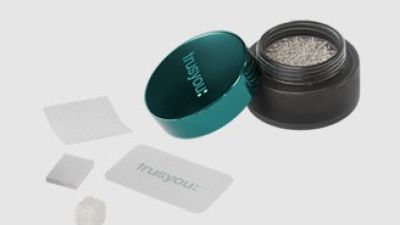
High-quality dental bone graft materials play an important role in advancing oral bone regeneration and improving patient care. A carefully selected bone substitute should provide reliable osteoconductive support, helping create a stable framework for the growth of new bone. This is especially valuable in procedures involving ridge preservation, implant site development, periodontal defects, and other situations where adequate bone volume is essential.
A refined bone powder material can be used as a practical option for supporting regeneration in the oral environment. Its porous structure and bone-conductive properties may facilitate the migration of cells and blood vessels, while helping maintain the shape and space needed during healing. When properly handled and applied according to clinical requirements, it can contribute to consistent treatment planning and predictable regenerative outcomes.
For dental professionals, material quality, handling characteristics, safety, and clinical reliability are key considerations. A dependable grafting material should integrate smoothly into established surgical protocols and support individualized care based on each patient’s anatomical condition. By combining appropriate case selection with precise surgical technique and attentive follow-up, clinicians can promote more favorable healing and support long-term oral rehabilitation.
FAQS
Use it when the implant is nearly aligned. It supports a direct screw-access path. This design is simple and often easier to scan.
It redirects access when an implant is slightly tilted. Check facial contour and soft-tissue clearance carefully. A bulky profile may irritate tissue or reduce esthetic quality.
Consider it for tilted posterior implants or full-arch restorations. It can create a more consistent insertion path. Confirm platform compatibility, restorative height, and available clearance.
A requested 15° angle may represent a different design convention. Some products use 17° or 30° corrections. Ask for drawings and measured specifications. Catalog language can mislead.
Request current quality certificates and their exact scope. The scope should cover the supplied dental device. Review expiry dates, issuing details, and material specifications. A certificate alone proves little.
Ask about dynamic loading, test configuration, cycle count, and failure criteria. Review the tested dimensions and connection design. A polished report with missing details deserves caution. Details matter.
Score unit price, fit, lead time, and purchasing risk separately. Include design approval, machining, inspection, packaging, and dispatch. A low quotation may become expensive after revisions. That happens.
Request sample dimensions, tolerance data, inspection records, and material certificates.
Conclusion
This guide presents the top 10 Dental Crown Abutment types for global buyers by examining material, retention method, and angulation. It compares titanium, zirconia, PEEK, and gold alloy through biocompatibility considerations under ISO 10993, while evaluating stock, custom, and CAD/CAM options with three practical fit metrics: connection accuracy, emergence profile, and marginal adaptation. Straight, angled, and multi-unit designs are matched to common 0°, 15°, and 30° restorative cases to support appropriate clinical selection.
The guide also contrasts cement-retained and screw-retained solutions using long-term performance considerations, including maintenance, retrievability, and complication risk over a ten-year period. For purchasing decisions, buyers are encouraged to verify supplier quality systems and product documentation against ISO 13485, ISO 14801, and applicable FDA Class II requirements. A final ranking framework weighs unit price, fit consistency, lead time, customization capability, and supply risk, helping international purchasers select dependable abutments based on total value rather than initial cost alone.