


Accelerating Full-Arch Restorations: The Critical Role of Multi-Unit Abutments in Immediate Loading
Accelerating Full-Arch Restorations: The Critical Role of Multi-Unit Abutments in Immediate Loading
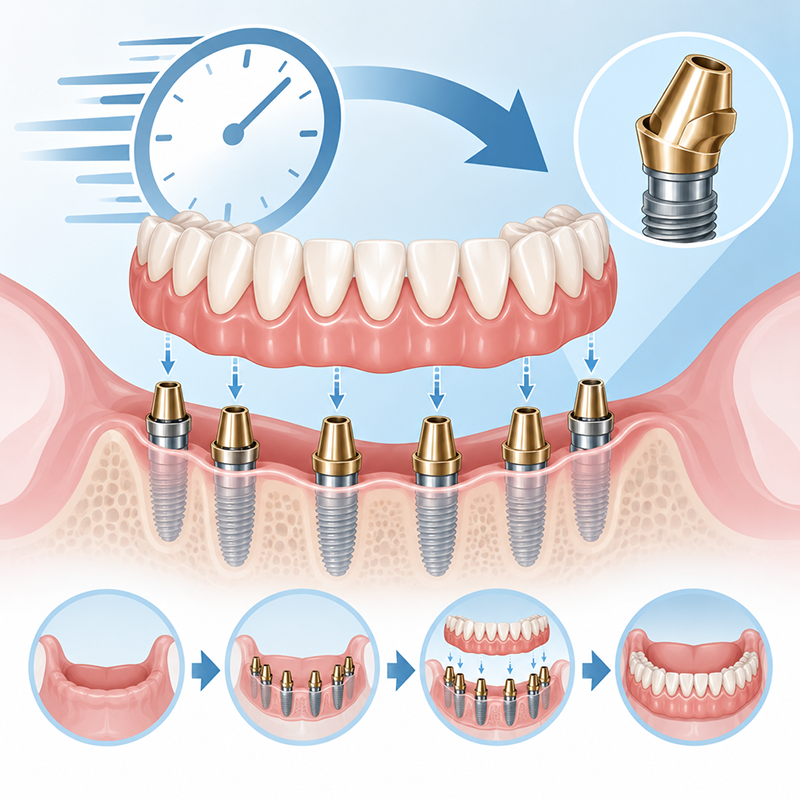
Understanding Full-Arch Restorations and Immediate Loading
In modern dentistry, full-arch restorations represent a transformative solution for patients suffering from total or near-total edentulism. Unlike single implant placements, full-arch procedures restore both function and aesthetics of the entire dental arch, often in the maxilla or mandible. One revolutionary breakthrough is immediate loading—placing a prosthesis within 24 to 48 hours after implant surgery. This approach dramatically improves patient comfort and satisfaction, reduces downtime, and streamlines clinical workflows.
Immediate loading, however, presents unique biological and mechanical challenges. Stability, proper force distribution, and tissue management are vital to minimize risks such as implant failure or excessive bone loss. It’s here that the importance of the Multi Unit Abutment dental solution comes to the forefront, enabling clinicians to achieve reliable, functional, and aesthetic results swiftly.
What Are Multi-Unit Abutments and How Do They Work?
A multi-unit abutmentis a specialized interface connecting Dental Implants to prosthetic restorations, particularly in cases where multiple implants are placed. These abutments serve as a foundation, compensating for implant angulation, providing a stable platform, and ensuring even force distribution across the prosthesis. The main materials used are titanium, renowned for its biocompatibility and mechanical strength.
Unlike standard abutments, multi-unit abutments offer superior adaptability. They come in varying heights and angles, allowing for fine-tuned adjustment according to patient anatomy and implant positioning. The versatility ensures that prosthodontic teams can avoid complications arising from divergent implants, and that prostheses fit snugly without compromising tissue health.
The Clinical Impact of Multi-Unit Abutments in Dental Implant Systems
The integration of multi abutment technology within dental implant systems has fundamentally changed full-arch rehabilitation. When used in conjunction with a robust dental implant system, such as Omni, Nobel Biocare, or Straumann, clinicians gain unparalleled flexibility and control.
Multi-unit abutments not only simplify the immediate loading workflow but also support long-term success. They reduce the need for complex laboratory procedures and adjustments, minimize risks for peri-implantitis, and facilitate easier hygiene maintenance for patients. For the clinician, these abutments make the transition from implant placement to prosthesis delivery seamless, allowing for quicker, more predictable outcomes that align with contemporary patient expectations.
Immediate Loading Protocol: How Multi-Unit Abutments Accelerate Full-Arch Restorations
The immediate loading protocol leverages multi-unit abutments as stabilizing anchors. During surgery, implants are placed and multi-unit abutments are immediately attached, compensating for misalignment and achieving parallelism for the restoration. The provisional prosthesis is then secured, allowing patients to leave the clinic with fully functional teeth on the same day.
This protocol hinges on primary stability, precise torque values, and rigorous planning. Multi-unit abutments play a critical role by distributing occlusal forces evenly, protecting the underlying bone from overload. Their modular design also enables the clinician to rapidly switch between provisional and definitive prostheses without repeated surgical intervention. This speeds up the entire rehabilitation process, reducing both chair time and healing period, and dramatically enhancing patient experience.
Full-Arch Maxillary Rehabilitation with Immediate Loading Supported by OMNI Abutments
A compelling case study involves the use of OMNI abutments in full-arch maxillary rehabilitation. Patients presenting with advanced maxillary atrophy require careful implant placement to ensure primary stability. OMNI multi-unit abutments provide solutions by offering angled and straight profiles that align implants correctly and facilitate proper prosthetic seating.
In the immediate loading scenario, OMNI abutments are connected directly after implant placement, securing a provisional screw-retained bridge. The unique design allows for easy access and removal of prostheses, encouraging soft-tissue healing and adaptation. This streamlines post-operative care, minimizing complications and maximizing both functional and aesthetic outcomes. Ultimately, patients benefit from restored chewing efficiency and facial support almost instantly, which is especially critical for those seeking life-changing dental solutions.
Technological Innovations in Multi Unit Abutment Dental Systems
Ongoing innovations in multi unit abutment dental systems have pushed the boundaries of what’s possible in full-arch restorations. CAD/CAM technology enables the custom design of prostheses that fit patient-specific topography and abutment configurations. Advances in surface treatments of titanium dental implant components have improved osseointegration and long-term survival rates.
Another evolution is the digital workflow: intraoral scanning, virtual planning, and guided surgery tools simplify multi-unit abutment placement, ensuring precision and repeatability. With digital libraries for leading implant brands, clinicians can quickly design and manufacture provisional or definitive prostheses and optimize every stage from surgery to final delivery. These advances empower clinicians to achieve both aesthetic excellence and functional outcomes even in complex full-arch scenarios.
Key Advantages of Multi Abutment Systems for Implant Dentists and Patients
Multi abutment systems offer profound benefits for both clinicians and patients. From a clinical perspective, they enhance prosthetic flexibility, accommodate complex anatomical challenges, and enable immediate loading with fewer risks. The modularity of multi-unit abutments reduces surgical time and eliminates guesswork during angulation corrections.
For patients, the advantages include reduced wait times, improved comfort, and the ability to restore normal life activities immediately after surgery. These abutments also facilitate ongoing maintenance; screw-retained prostheses can be easily removed for hygiene or repair, supporting long-term oral health. The reliability of the titanium dental implant interface increases patient confidence and satisfaction, cementing the full-arch restoration as a life-altering procedure.
Patient Experience and Outcomes: The Emotional and Functional Impact
Although technological and procedural advances are vital, patient experience remains paramount. Immediate loading protocols supported by advanced multi-unit abutments allow individuals to regain speech, chewing function, and facial aesthetics in hours—not weeks or months. This rapid transformation can have profound emotional effects, impacting self-esteem, social interactions, and overall quality of life.
Well-designed full-arch restorations supported by multi-unit abutments promote stable soft tissue outcomes, reduce postoperative pain, and minimize emergency visits. The predictability of these procedures boosts patient trust in skilled implant dentists, encouraging word-of-mouth referrals and clinic growth. Moreover, improved retention and load distribution foster long-term prosthesis survival, further supporting patient satisfaction.
Optimizing Practice Success: Multi-Unit Abutment Selection and Workflow Integration
Choosing the right multi-unit abutment system and integrating it with a compatible dental implant system is crucial for maximizing practice efficiency and patient outcomes. Leading manufacturers offer detailed protocols and digital tools to simplify the process. Clinicians should consider factors such as abutment angle options, platform compatibility, retrievability, and available prosthetic components.
Effective workflow integration involves thorough preoperative planning, precise intraoperative execution, and meticulous follow-up care. Digital planning software, guided surgical kits, and high-quality prosthetic libraries all contribute to consistent results. Dentists who invest in ongoing training and stay abreast of innovations will find their ability to deliver seamless full-arch restorations significantly enhanced.
Frequently Asked Questions
Q: What makes multi-unit abutments essential for immediate loading in full-arch restorations?
Multi-unit abutments allow implant dentists to correct angulation, achieve parallelism, and distribute occlusal load evenly. This facilitates immediate loading by ensuring prostheses can be placed securely and functionally right after implant surgery, reducing risks and enhancing patient outcomes.
Q: How do OMNI abutments differ from other multi-unit abutment systems?
OMNI abutments offer a broad selection of angles, heights, and platform compatibility, making them suitable for complex cases such as maxillary atrophy. Their ease of use and flexibility streamline both provisional and permanent prosthesis placement, enabling reliable immediate loading and long-term maintenance.
Q: Is full-arch maxillary rehabilitation with immediate loading safe and predictable?
With proper case selection, experience, and high-quality components like multi-unit abutments, the procedure becomes highly predictable. Clinical studies and patient reports confirm excellent functional and aesthetic results, with high survival rates for both implants and prostheses.
Q: What materials are used for multi-unit abutments?
Most multi-unit abutments are made of titanium due to its biocompatibility, durability, and precision. Some systems offer alternative materials like zirconia for highly aesthetic cases, but titanium remains the gold standard.
Q: Can multi-unit abutments be used with all dental implant systems?
Compatibility depends on platform specification and manufacturer. Leading companies provide abutments that fit their dental implant systems, but cross-platform options are increasingly available for maximum flexibility.
Expanding Beyond Immediate Loading: Maintenance, Longevity, and Emerging Trends
Immediate loading is just the first step in a lifelong restoration journey. Multi-unit abutments facilitate easy maintenance of screw-retained prostheses, minimizing patient visits and reducing complications. Annual check-ups ensure the restoration remains stable, and any adjustments can be made without additional surgery.
Emerging trends include new materials, such as high-strength ceramics, and surface modifications to promote tissue integration and reduce biofilm. The future points towards more digitalization: AI-driven planning, advanced intraoral scanners, and next-generation implant platforms promise ever-greater precision and patient personalization. For both dentists and patients, these trends mean improved outcomes with less risk, downtime, and discomfort.
In summary, the integration of multi unit abutment dental technology is the cornerstone of accelerated, predictable, and highly successful full-arch restorations. Immediate loading protocols, supported by innovations such as OMNI abutments, empower implant dentists to deliver functional and aesthetic results within hours. With superior force distribution, modularity, and digital integration, multi-unit abutments address both clinical and patient needs, marking a watershed moment in restorative dentistry. As technology evolves, the future of full-arch restoration will only become brighter, more accessible, and more patient-centered.