



How does the design and shape of a denture implant abutments affect the esthetics of the final restoration?
How does the design and shape of a denture implant abutments affect the esthetics of the final restoration?
The design and shape of the denture Implant Abutments have a significant impact on the aesthetics of the final restoration, mainly in the following aspects:
-
Abutment height and shape:
-
The height and shape of the abutment determine the contour and position of the restoration. A taller abutment provides better support but may result in an unnatural appearance in some cases. The morphology of the gums must be considered during design to ensure that the restoration blends in with the surrounding tissue.
-
Angle of abutment:
-
The angle design of the abutment can affect the occlusal relationship and esthetics of the restoration. Proper angle can help the restoration better adapt to the patient’s bite and avoid an unnatural appearance.
-
Material Selection:
-
The material of the abutment (such as titanium or zirconium) can also affect esthetics. Zirconium generally has better optical properties, can more closely match the color of natural teeth, and is suitable for use in the anterior area.
-
Surface treatment:
-
The surface treatment technique of the abutment (such as polishing or sandblasting) can affect the reflection of light and thus the appearance of the restoration. A smooth surface can provide a more natural appearance, while a rough surface may affect the aesthetics.
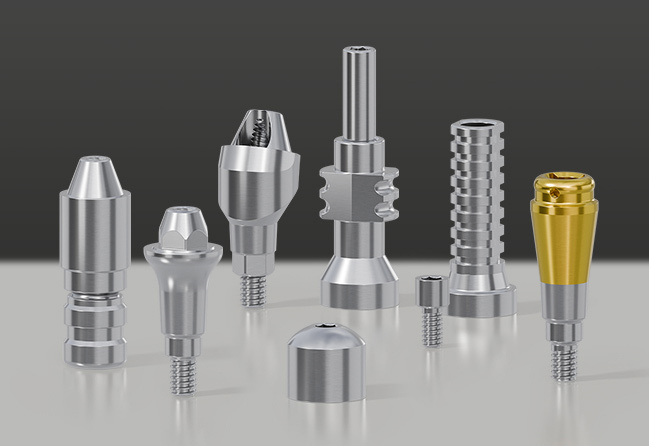
How does the surface treatment technology of denture implant abutments affect the bone integration of implants?
The surface treatment technology of denture implant abutments has an important influence on the bone integration of implants, which is mainly reflected in the following aspects:
-
Surface roughness:
-
Increased surface roughness can improve bone cell adhesion and promote bone integration. The rough surface provides more microstructures, which helps the growth and attachment of bone tissue.
-
Coating Technology:
-
Some abutments have bioactive coatings (such as hydroxyapatite coatings) that can promote osseointegration. These coatings form a chemical bond with bone tissue, increasing the stability of the implant.
-
Surface treatment method:
-
Common surface treatment methods include sandblasting, acid etching and electrolytic polishing, etc. These methods can change the surface properties of the abutment and affect the growth and attachment of bone cells.
-
Biocompatibility:
-
Surface treatment technology should also consider the biocompatibility of the material to ensure good interaction between the implant and the surrounding tissue and reduce the risk of inflammation and rejection.
In denture restoration, how to evaluate the stability and durability of denture implant abutments?
The stability and durability of denture implant abutments can be assessed by:
-
Clinical Examination:
-
The dentist will perform a clinical examination to assess the fit and stability of the abutment, including checking whether the connection between the abutment and the implant is tight and whether there is any looseness or discomfort.
-
Radiological evaluation:
-
Imaging techniques such as X-rays or CT scans can be used to assess how well the implant fits into the surrounding bone and to check for bone loss or infection.
-
Bite Test:
-
The bite test allows the surgeon to assess the stability of the abutment during chewing and ensure that no excessive bite forces are applied to the abutment.
-
Patient Feedback:
-
The patient’s subjective feelings are also important. The doctor should ask the patient about the comfort and functionality of the implant so that timely adjustments can be made.
What is the future development trend of denture implant abutments?
The future development trends of denture implant abutments mainly include the following aspects:
-
Personalized Design:
-
With the development of digital technology, personalized design will become a trend. Through 3D printing and computer-aided design (CAD), abutments can be customized according to the patient’s specific oral structure to improve fit and aesthetics.
-
Application of new materials:
-
New biomaterials (such as polymers and bioceramics) will be widely used in the manufacture of abutments to improve biocompatibility and durability.
-
Innovation in surface treatment technology:
-
Future surface treatments will be more advanced and may include nanotechnology and bioactive coatings to further promote bone integration and improve implant stability.
-
Intelligent monitoring:
-
With the advancement of technology, intelligent monitoring systems may appear in the future to monitor the status of implants and the health of surrounding tissues in real time, detect problems in time and intervene.
How do new technologies affect its design and application?
New technologies have had a profound impact on the design and application of denture implant abutments, mainly in the following aspects:
-
Digital Technology:
-
Digital scanning and 3D printing technologies make the design and manufacture of abutments more precise, and they can be customized to the specific needs of patients, improving fit and comfort.
-
Computer Aided Design (CAD):
-
The application of CAD software makes the design process more efficient and can quickly generate multiple design options to help doctors and technicians choose the best option.
-
Advances in biomaterials:
-
The development of new biomaterials has significantly improved the biocompatibility and durability of the abutment and reduced the incidence of complications.
-
Intelligent Technology:
-
The application of intelligent monitoring and data analysis technology enables doctors to monitor the status of implants in real time, detect potential problems in time, and improve the success rate of treatment.