


Navigating Digital Workflows: Integrating Titanium Abutments with Modern CAD/CAM Systems
Navigating Digital Workflows: Integrating Titanium Abutments with Modern CAD/CAM Systems
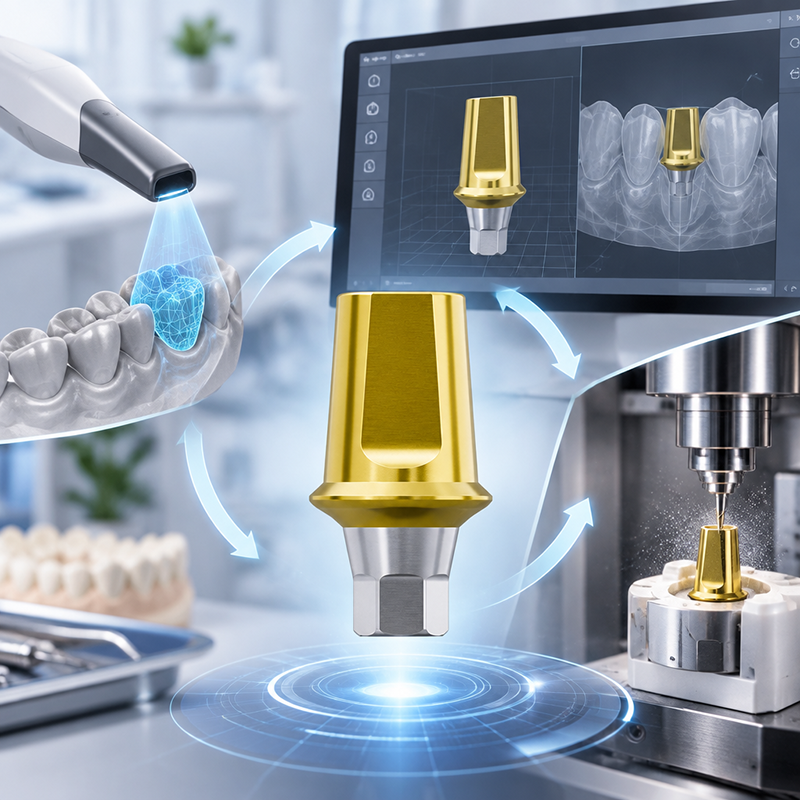
As the dental industry continues to evolve with the advent of digital technology, integrating Titanium Abutments into modern CAD/CAM workflows has become a game-changer for implantology. For dental professionals, laboratory technicians, and implant manufacturers, understanding this digital integration is essential for delivering precision, aesthetics, and long-term success. This detailed guide explores the role ofabutment, specifically titanium abutment, the critical use of scan body, and practical solutions for optimizing the digital workflow, ensuring stakeholders stay competitive and meet growing patient expectations.
The Rise of Digital Implantology: Why CAD/CAM Matters
Digital transformation in dentistry offers remarkable benefits, from simplifying design procedures to improving accuracy and outcomes. CAD/CAM (Computer-Aided Design/Computer-Aided Manufacturing) systems enable clinicians and technicians to digitally design and fabricate prosthetic components like abutments, crowns, and bridges with unprecedented precision. This technology has redefined workflows, providing real-time visualization, tailoring implant solutions precisely to each patient, and minimizing errors commonly associated with conventional techniques.
One of the most significant advancements is the integration of CAD/CAM with Dental Implants. The ability to digitally design and manufacture custom abutments, especially titanium abutments, leads to improved fit, function, and aesthetics. By leveraging digital scans and high-quality materials, professionals can deliver restorations that not only function perfectly but also blend seamlessly with natural dentition.
Understanding Titanium Abutments: Features and Advantages
A dental abutment serves as a connector between the implant fixture and the final prosthetic restoration. The titanium abutment, due to its excellent biocompatibility, mechanical strength, and resistance to corrosion, remains one of the most popular choices for both clinicians and patients.
Advantages of titanium abutments include:
- Superior durability, supporting long-term implant performance
- Biocompatibility, minimizing risk of allergic reactions or tissue irritation
- Precision machining, allowing for tailored solutions suitable for complex cases
- Ability to withstand occlusal forces, ensuring restoration longevity
When paired with CAD/CAM systems, titanium abutments can be customized to each implant site, matching the emergence profile, angulation, and soft tissue requirements. This customization is essential for esthetic zones, delivering results that are both robust and natural-looking. Many titanium abutment suppliers now offer a range of digital-ready products, further facilitating seamless integration within digital dentistry.
The Critical Role of Scan Body in Digital Workflows
For a digital workflow to succeed, accurate data acquisition is fundamental. The scan body is a specialized device placed onto the implant during intraoral or laboratory scanning, providing a reference point for the CAD software. It enables precise digital mapping of the implant position, orientation, and relation to adjacent structures.
The scan body essentially bridges the gap between clinical reality and virtual design. Its geometry is recognized by the scanning device, ensuring the virtual abutment and restoration align perfectly with the actual implant. The use of high-quality dental implant scan bodies, compatible with leading implant systems and CAD/CAM software, virtually eliminates errors associated with manual impressions and simplifies the workflow.
Key features to consider in scan bodies include:
- Material compatibility (PEEK, titanium, or polymer blends)
- Shape and design for maximum scanning efficiency
- Ease of placement and removal
- Compatibility with specific implant systems
By selecting the appropriate scan body, professionals ensure that data acquisition is accurate, thus laying the foundation for successful CAD/CAM fabrication of abutments and prostheses.
Designing Titanium Abutments with Ti-Base: Revolutionizing Digital Implant Solutions
The emergence of Ti-Base components has further revolutionized digital implantology. Ti-Base acts as an intermediary between the implant fixture and the digitally designed prosthesis, allowing the CAD/CAM system to fabricate custom abutments and crowns with secure, precision fit on the titanium interface.
Why Ti-Base makes a difference:
- Enhances retention and stability of the restoration
- Facilitates hybrid abutment solutions, combining titanium strength and esthetic materials like zirconia
- Streamlines workflow from scanning to manufacture, reducing chair time and laboratory steps
- Allows for easy repair and replacement of suprastructures without disturbing the implant base
CAD/CAM software supports the design and manufacture of prosthetics directly onto Ti-Base, ensuring precise fit and optimal load transfer. This synergy between digital design, titanium abutment, and Ti-Base components produces restorations that meet rigorous clinical and esthetic demands.
Step-by-Step: Integrating Titanium Abutments into the Digital Workflow
Achieving seamless digital workflow with titanium abutments involves several crucial steps:
1. Implant Placement and Positioning: Careful planning and surgical placement of dental implants set the stage for optimal prosthetic outcomes. Guided surgery and digital planning tools help determine ideal placement for both functional and esthetic needs.
2. Scan Body Installation and Intraoral Scanning: After osseointegration, the scan body is placed onto the implant, and intraoral scanning captures precise 3D data. Technologies such as optical scanners, combined with high-quality scan bodies, ensure high-resolution digital impressions.
3. CAD Design of Abutment: The scanned data is imported into CAD software. Technicians design the custom titanium abutment, considering gingival architecture, occlusal load, and restorative requirements.
4. Manufacturing via CAM: The virtual design is translated into physical form by CAM systems. Milling machines fabricating titanium abutments achieve accuracy down to microns, ensuring a perfect fit on the implant.
5. Final Prosthetic Placement: After quality checks, the abutment is seated, and the crown or bridge is cemented or screwed onto the abutment. Efforts focus on achieving optimal function, esthetics, and patient comfort.
Each stage benefits from digital precision, reducing manual labor, improving communication, and accelerating turnaround times. For practitioners and laboratories, this workflow minimizes complications, elevates patient satisfaction, and increases operational efficiency.
Choosing a Reliable Titanium Abutment Supplier: What Buyers Really Want
The choice of titanium abutment supplier can dramatically affect clinical outcomes and digital workflow success. Buyers increasingly demand suppliers offering high-quality, digitally compatible abutments, robust scan bodies, and Ti-Base components, alongside expert technical support and regulatory compliance.
Critical factors when selecting titanium abutment suppliers include:
- Material purity and ISO certification, guaranteeing patient safety
- Precision machining and CAD/CAM integration compatibility
- Comprehensive product range including scan bodies and Ti-Bases
- Digital resources and support for workflow optimization
- Transparent pricing and reliable logistics
Reputable suppliers go beyond just selling abutments; they provide turnkey solutions for digital dentistry. By partnering with a supplier who understands the nuances of digital implant workflows and supports innovation, clinicians and technicians ensure their practices remain future-ready and patient-centric.
Overcoming Common Challenges in Digital Implant Workflows
Despite the many advantages, integrating titanium abutments and scan bodies into digital workflows is not without challenges:
1. Data Accuracy: Inaccurate scanning or misaligned scan bodies can compromise the entire workflow. Using trusted scan bodies and validating scanner calibration is essential.
2. Software Compatibility: Not all CAD/CAM platforms support every abutment or implant system. Practitioners must ensure their software is updated and compatible with the components being used.
3. Technical Training: A digitally driven workflow demands a new set of skills. Ongoing education for clinicians and technicians is vital to harness CAD/CAM’s full potential.
4. Material Handling: Milling titanium requires specific tools and knowledge. Without proper handling, abutments may suffer from microfractures or surface irregularities, affecting longevity and precision.
5. Patient-Specific Customization: Every implant case is unique. Digital workflows should remain flexible, allowing for adjustments based on anatomical, esthetic, or functional needs.
Addressing these challenges proactively is crucial. Suppliers and software developers are continually responding with improved scan body geometries, smarter CAD algorithms, more user-friendly interfaces, and hands-on training, making the transition to full digital workflows smoother than ever.
Frequently Asked Questions About Ti-Base, CAD/CAM, and Digital Implantology
What is a Ti-Base and how does it enhance CAD/CAM workflows?
A Ti-Base is a titanium interface that connects the implant to custom-designed prosthetic components. It allows CAD/CAM systems to securely fabricate and bond abutments and crowns with a reliable, stable connection. Ti-Base reduces complications, improves prosthetic repair options, and enables hybrid solutions like zirconia-on-titanium abutments.
How does a scan body improve data acquisition in digital workflows?
A scan body provides a physical reference for intraoral or laboratory scanning, ensuring the implant’s position is accurately transferred to the digital workspace. High-quality scan bodies eliminate the guesswork, making CAD/CAM design and manufacturing more precise.
Are titanium abutments compatible with all CAD/CAM systems?
Most widely used CAD/CAM platforms support titanium abutments, provided they are matched with compatible scan bodies and implant analogs. It’s essential to verify compatibility before digitizing a workflow, especially with proprietary systems or customized solutions.
How do I find a reliable titanium abutment supplier for digital workflows?
Look for suppliers offering ISO-certified materials, advanced machining, CAD/CAM integration resources, and comprehensive product ranges. Top suppliers also provide scan bodies and Ti-Base components optimized for digital dentistry, along with technical support and educational materials.
Can CAD/CAM workflows be adapted to complex multi-unit cases?
Yes, digital workflows can be scaled from single-unit to full-arch restorations. Scan bodies, custom abutments, and Ti-Base components streamline the process, with software capable of managing multiple implant positions and occlusal relationships efficiently.
Future Trends: Digital Implantology and Emerging Technologies
The future of digital implantology centers on enhanced connectivity, automation, and material science. Artificial intelligence (AI) is increasingly applied to CAD/CAM software for automated abutment design, optimized placement, and predictive analytics. 3D printing is complementing conventional milling, providing rapid prototyping and custom abutment manufacturing.
Tele-dentistry, cloud-based workflows, and integrated platforms allow technicians and clinicians to collaborate remotely, further minimizing turnaround times and reducing errors. Implant materials are evolving, with developments in titanium alloys and surface treatments that enhance osseointegration and simplify abutment production.
For suppliers and buyers, staying ahead means adopting flexible digital ecosystems, engaging with educational programs, and embracing new technologies as they emerge. The ultimate goal is to deliver superior patient outcomes, blending robust engineering with digital precision and esthetic artistry.
In summary, integrating titanium abutments, scan bodies, and CAD/CAM technology represents the most significant leap forward in implant dentistry. By mastering digital workflows, selecting quality suppliers, and embracing continuous innovation, dental professionals can ensure lasting success for both their practices and their patients.