


One-Stage Surgery and Streamlined Prosthetics: The Clinical Efficiency of Tissue Level Implants
One-Stage Surgery and Streamlined Prosthetics: The Clinical Efficiency of Tissue Level Implants
Understanding Tissue Level Implants in Modern Dentistry
The quest for efficient, reliable, and patient-friendly solutions in implant dentistry has driven significant innovation over recent decades. Among the advancements, tissue level Dental Implant systems have emerged as a preferred choice for many clinicians and patients alike. These implants are designed with a unique collar that sits above the bone level, simplifying placement and restorative procedures by providing a clear demarcation between soft tissue and implant. This article explores how one-stage surgery and streamlined prosthetics using tissue level implants are transforming dental practice, focusing on the role of the Abutment, Dental Abutment, and related components.
What Is the One-Stage Surgery Approach?
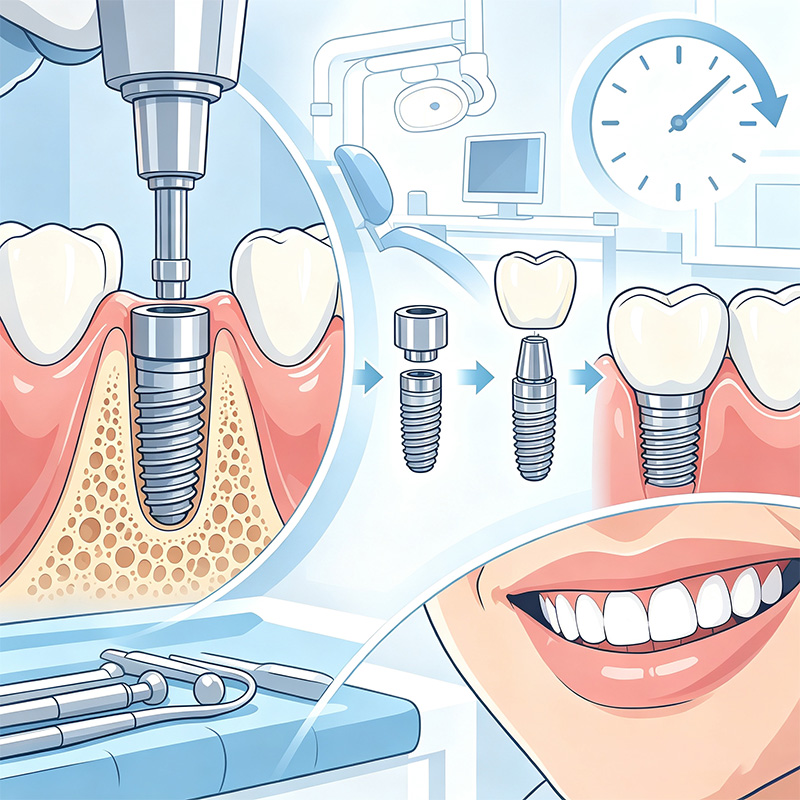
One-stage surgery refers to a protocol where the implant and its Healing Abutment are placed in a single procedure, avoiding the need for a second surgery to expose the implant site. This technique is especially suited to tissue level implants, which are engineered for immediate placement of the abutment at the time of implant insertion. By integrating thedental Abutment during the initial surgery, clinicians can minimize patient discomfort, expedite healing, and reduce chair time. Unlike the traditional two-stage method that requires multiple interventions, the one-stage approach leverages the inherent design of tissue level implants for restorative efficiency and predictable outcomes.
The Role of Abutment in Tissue Level Implant Systems
The Abutment is a crucial link between the dental implant fixture and the final restoration. In tissue level systems, the abutment often functions as the visible portion that supports the prosthetic crown, bridging the gap between bone-anchored implants and the oral environment. The selection of a suitable dental Abutment, whether temporary or permanent, directly influences the stability of the restoration and the health of peri-implant tissues. Modern tissue level implants use precision-engineered abutments that minimize micro-movement and reduce bacterial infiltration, ensuring longevity and comfort. Dental professionals can choose from various abutment designs, including customized, pre-fabricated, and healing types, depending on clinical needs.
Streamlining Prosthetic Workflow: Advantages for Dentists and Patients
One of the most significant clinical benefits of tissue level implants is the streamlined prosthetic workflow. With a clear separation between the bone and soft tissue collar, restoring implants becomes straightforward. The integrated platform allows for direct placement of the dental crown without complex multi-component assemblies often required in bone level implant systems. For practitioners, this translates into fewer appointments, reduced laboratory costs, and simplified impression techniques. For patients, it means less time in the dental chair and faster results. The use of a tissue level dental implant helps avoid complications related to tissue manipulation, supporting a healthier soft tissue response and easier maintenance of oral hygiene.
Enhanced Clinical Efficiency: Faster Healing and Reduced Complications
Clinical efficiency is measured not just in speed but also in the quality of healing and reduction in post-operative complications. Tissue level implants promote faster healing by minimizing surgical trauma and eliminating the need for a second surgical intervention. The placement of a dental implant healing abutment during the one-stage surgery serves as a protective cap, allowing the surrounding gum tissue to adapt and mature around the implant collar. This encourages optimal tissue integration and a natural emergence profile, which is instrumental in creating lifelike aesthetic results. Additionally, the simplified design reduces risks such as peri-implantitis and bone loss, ensuring long-term functional and aesthetic outcomes.
Rationale for Tissue Level Implant Selection: Indications and Contraindications
Tissue level implants are ideally suited for cases where soft tissue management and restorative simplicity are critical. They are particularly effective in posterior regions where aesthetics are less demanding, but robust function is essential. Indications include single tooth replacements, short-span bridges, and cases with favorable bone volume. Patients with limited ability to attend multiple appointments or those seeking minimally invasive solutions also benefit greatly from the one-stage protocol. However, tissue level implants may not be recommended in highly aesthetic anterior zones where subgingival margin placement is required, or in patients with thin biotypes prone to recession. Careful case selection and proper evaluation of tissue health are paramount to maximizing clinical success.
Comparative Outcomes: Tissue Level vs Bone Level Implants
In evaluating the clinical efficiency of tissue level implants, it is essential to contrast them with bone level implant systems. Bone level implants sit flush with the alveolar bone, often necessitating multiple restorative steps and customized abutment solutions. While bone level implants offer flexibility in margin placement and are favoured in aesthetic zones, tissue level implants win out in terms of ease of placement, reduced surgical complexity, and maintenance. Studies consistently show that tissue level implants result in lower rates of marginal bone loss and fewer complications, especially when the prosthetic workflow is simplified. For most routine cases, tissue level implant systems offer a balanced solution, combining robust engineering with patient-centered outcomes.
Dental Implant Healing Abutment: Supporting Tissue Integration
The dental implant healing abutment plays an indispensable role in the tissue level protocol. It acts as a placeholder that shapes the soft tissue during the critical phase of healing, securing the emergence profile and facilitating the creation of a seamless transition between the implant and the final prosthesis. Using a tissue level design, the healing abutment is installed during the one-stage surgical procedure and remains in place until the definitive restoration is ready. This ensures that the soft tissue contours are established naturally, reducing the need for additional interventions. The result is a harmonious, aesthetic restoration with optimal tissue health and minimal risk of complications.
Frequently Asked Questions (FAQ): The Benefits of Tissue Level Implants Restoratively
What makes tissue level dental implants beneficial restoratively? Tissue level implants simplify the restorative process by providing a pre-defined platform for abutment and crown placement. This eliminates complex subgingival margin work and reduces the risk of peri-implant inflammation.
How does one-stage surgery with tissue level implants enhance clinical outcomes? By combining implant placement and abutment installation into a single procedure, patients benefit from reduced surgical trauma, faster healing, and a streamlined prosthetic workflow. This approach minimizes chair time while improving the predictability of soft tissue aesthetics.
Are tissue level implants suitable for every patient? While tissue level implants offer numerous advantages, they are best suited for cases without high aesthetic demands and stable soft tissue conditions. They may not be the ideal choice for the anterior region or patients with thin biotype gingiva. Proper assessment ensures suitability.
Why is the Abutment important in dental implant success? The abutment forms the critical interface between the implant and restoration. Its design and precision impact both the stability of the prosthesis and the health of peri-implant tissues. Well-designed abutments in tissue level systems minimize movement and promote healthy tissue integration.
How does the healing abutment contribute to overall success? Placed during the one-stage procedure, the healing abutment shapes the tissue around the implant, promoting optimal emergence profile and supporting natural-looking aesthetics. It plays a key role in achieving functional and aesthetic success.
Best Practices in Tissue Level Implant Placement
To maximize the benefits of tissue level dental implants, clinicians should adhere to precise surgical and restorative protocols. Site selection, proper angulation, and careful soft tissue handling are fundamental steps. Using high-quality dental Abutment components and ensuring the correct fit reduces micro-movement, which is a primary cause of peri-implant complications. Utilizing digital diagnostics, such as 3D imaging and guided surgery, enhances placement accuracy and outcomes. Additionally, matching prosthetic components, such as the crown and healing abutment, to the patient’s unique anatomy ensures optimal integration and aesthetics.
Patient Satisfaction and Long-Term Maintenance
Patient satisfaction is ultimately rooted in longevity, comfort, and aesthetics of the restoration. Tissue level dental implants contribute to high satisfaction rates thanks to their streamlined protocol, minimal invasiveness, and ease of maintenance. Maintaining oral hygiene around the collar is simple, and regular follow-ups with a dental professional help prevent complications. The robust design promotes longevity, requiring fewer interventions and ensuring the preservation of both soft tissue and bone. Education about at-home care, professional cleaning, and restorative evaluation are important elements for ensuring lasting success in tissue level implant cases.
Cost-Effectiveness and Accessibility
One-stage surgery with tissue level implants reduces total treatment cost by minimizing the number of clinical visits, surgeries, and restorative steps. For dental practices, this means increased productivity and fewer resources spent on complex procedures. For patients, the streamlined workflow translates into higher affordability and accessibility, making high-quality dental implants available to a broader population. Cost savings from fewer prosthetic components and reduced laboratory involvement further reinforce the value proposition of tissue level implant systems in modern practice.
Emerging Trends and Future Innovations
Tissue level implants continue to evolve with advancements in digital dentistry, materials science, and surgical techniques. The integration of CAD/CAM technologies allows customization of abutments and crowns for even greater precision and aesthetics. Bioactive surfaces and improved implant geometries are being developed to further enhance tissue integration and healing. As research continues, new protocols for one-stage surgery and restorative efficiency promise to make implant dentistry even safer, faster, and more accessible. The synergy of technology and clinician expertise ensures tissue level implants remain at the forefront of restorative dental innovation.
Tissue level dental implants have revolutionized the approach to implant surgery and restoration, offering unparalleled efficiency, clinical predictability, and patient satisfaction. By combining a one-stage surgical protocol with streamlined prosthetic workflows, these systems answer the need for robust, cost-effective, and minimally invasive solutions. The strategic use of Abutments, healing abutments, and precision-engineered components enhances tissue health and aesthetic outcomes, making tissue level implants a preferred option for many clinical situations. With ongoing advancements and growing clinical experience, tissue level implants are poised to remain a dominant force in dental implantology, enabling practitioners to deliver high-quality restorations with confidence and efficiency.