


Streamlining Daily Implantology: The Clinical and Economic Value of Reliable Standard Abutments
Streamlining Daily Implantology: The Clinical and Economic Value of Reliable Standard Abutments
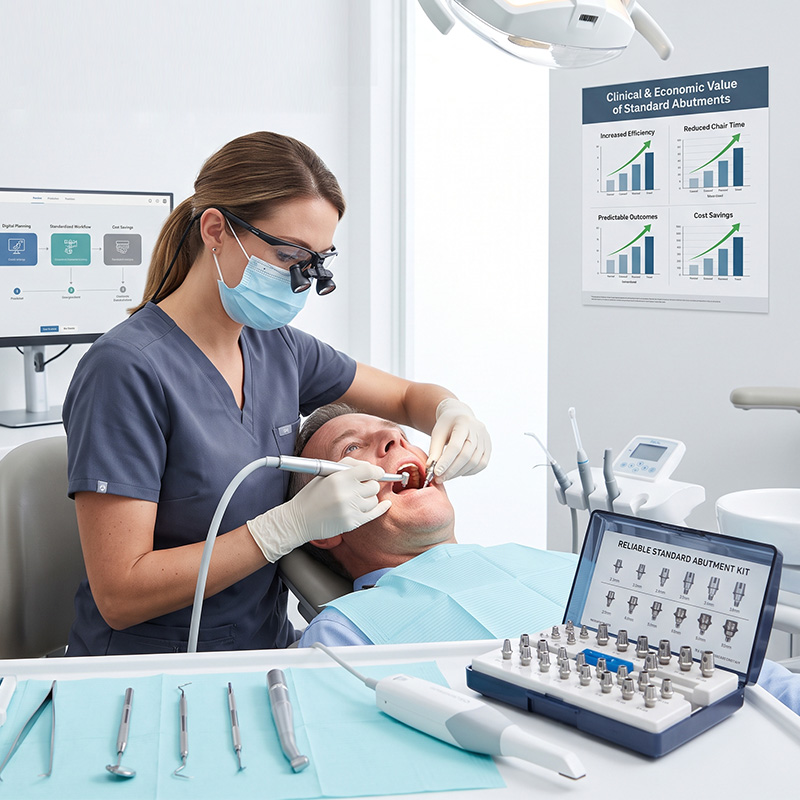
In the rapidly advancing world of Dental Implants, achieving predictable, high-quality results with efficiency is paramount for both clinicians and dental laboratories. At the heart of every successful implant-supported restoration lies theabutment—a critical component bridging the dental implant and the prosthesis. The evolution and reliability of Dental Abutment solutions, especially standard and prefabricated types, have fundamentally transformed the clinical and economic landscape of implant dentistry. This article explores how adopting reliable standard abutments can streamline daily workflows, ensure patient satisfaction, and deliver tangible economic benefits, thereby addressing the real needs of both dental professionals and their patients.
The Role of Abutments in Modern Implantology
A dental abutment is a fundamental element in dental implantology, acting as the connecting piece between the implant fixture embedded in the jawbone and the visible dental prosthesis such as a crown, bridge, or denture. Selection of the appropriate abutment type—whether standard, pre-manufactured, or customized—greatly impacts treatment outcomes. The ideal abutment delivers stability, optimal tissue integration, and a precise fit, whilst facilitating the restorative process for the clinician and ensuring long-term durability for the patient.
Innovations in implantology have produced a range of abutment solutions, but reliable standard abutments still play a major role in routine dental implant therapy. Their versatility, cost-effectiveness, and consistent quality make them the preferred choice for many indications, especially when the implant is ideally placed and tissue conditions are favorable.
Clinical Advantages of Reliable Standard Abutments
Standard abutments have been engineered for predictability and ease of use, qualities that are highly valued in busy dental practices. By leveraging standardized dimensions and connection interfaces, these abutments facilitate a streamlined restorative workflow. When high-quality standard abutments are used, clinicians can expect precise fit, reduced micro-movements at the implant-prosthesis junction, and minimized risk of screw loosening—all factors that significantly contribute to long-term treatment success.
Furthermore, the use of reliable standard abutments reduces chairside adjustments, as their geometry is precisely matched to the compatible implant systems. They are available in a variety of heights and angulations, allowing clinicians to optimize emergence profiles, especially in aesthetically demanding zones. For single crowns, straightforward bridges, or overdenture bars, standard abutments deliver an ideal balance between functional stability and simplicity.
Soft tissue management is also improved with high-quality standard abutments. Their biocompatible materials—usually medical-grade titanium or zirconia—support ideal tissue healing and prevent peri-implant inflammation. This predictability means fewer complications, less post-operative care, and more satisfied patients who enjoy natural-looking, fully functional dental implants.
Economic Value: Reducing Cost Without Compromising Quality
In dental practice management, economic efficiency is as crucial as clinical effectiveness. Standard abutments are cost-efficient by virtue of their mass manufacture, supporting laboratories and clinics to optimize their expenditure without sacrificing quality. Their availability from reputable dental suppliers ensures consistent pricing without the delays or extra costs frequently associated with custom abutments.
For practices, selecting reliable standard abutments improves inventory management. There’s no need for elaborate digital design or outsourcing for simple cases, and the rapid, predictable delivery of standard components accelerates the restoration process—benefiting both the clinic’s bottom line and patient satisfaction. Additionally, the precise fit and mechanical reliability translate to fewer complications and aftercare visits, saving both chair time and resources.
Furthermore, when standard abutments are used appropriately, they keep the entire treatment cost-effective for patients, helping implant therapy become more accessible. In a competitive market, offering affordable, high-quality dental implant solutions can be a key differentiator for growing practices and laboratories.
Simplifying the Daily Workflow With Standard Abutment Solutions
One of the standout benefits of robust standard abutments is the remarkable simplification they bring to daily workflows in dental clinics and laboratories. The standardized connection protocols, shape, and componentry eliminate much of the variability and potential confusion involved with restoration fabrication.
With fewer variables, practices benefit from straightforward treatment planning, predictable laboratory communication, and reduced chances for clinical errors. Whether used in immediate loading scenarios or after traditional osseointegration periods, standard abutments allow for rapid placements with well-understood guidelines, boosting procedural confidence among clinicians and their teams.
Modern abutment systems also come with clear torque recommendations, standardized prosthetic screws, and streamlined laboratory analogs and coping systems. This directly translates into efficiency and a lower incidence of mistakes, repairs, or remakes, which ultimately protects the practice's profitability and reputation.
These workflow benefits extend to impression-taking as well. With compatible impression copings for standard abutments, transfer of intraoral data to the laboratory is seamless and precise. This reduces prosthetic fit adjustments at delivery, further shortening patient chair time and enhancing their overall experience.
Reliable Standard Abutments vs. Custom Abutments
While custom abutments have their place—particularly in cases with significant angulation correction or complex tissue contouring—reliable standard abutments remain the workhorse of daily implantology, excelling in routine, straightforward cases. The advantage of custom solutions is their adaptability in challenging implant positions or for highly demanding aesthetic cases, which can require bespoke emergence profiles, angulations, or material choices.
However, standard abutments should not be underestimated. With improvements in pre-manufactured abutment designs, most routine cases can be elegantly restored using off-the-shelf options, eliminating delays and reducing overheads. For the majority of single-tooth, bridge, or overdenture restorations, standard abutments deliver consistent outcomes much more efficiently.
Choosing between standard and custom options is often a matter of clinical judgment. However, by defaulting to reliable standard abutments where possible, practices maximize both clinical efficiency and economic gain, only turning to custom abutments when anatomically required. This selective approach ensures that practices stay competitive and responsive to patient needs.
Material Advancements and Their Impact on Longevity
A crucial factor in the popularity and reliability of standard abutments is continual advancement in their material composition. High-grade titanium abutments are the industry gold standard, offering superior mechanical properties, excellent biocompatibility, and resistance to corrosion. Their long-term performance is well-documented, providing peace of mind for both clinicians and patients.
In the anterior aesthetic zone, zirconia abutments are increasingly chosen for their natural color and excellent tissue response. Modern zirconia abutments combine strength with aesthetics, and when produced under strict quality controls, their reliability matches that of their titanium counterparts. These materials are processed with precision—often by top standard abutment or custom abutment suppliers whose products comply with international standards such as FDA, CE, and ISO certifications.
As a result, both titanium and zirconia standard abutments offer a reliable long-term foundation for all types of dental implant prosthetics. Their consistent performance translates to fewer mechanical failures, less prosthetic maintenance, and reduced total cost of ownership for the implant restoration.
Reliable Standard Abutments and Patient Satisfaction
Patient satisfaction hinges on the functional and aesthetic outcome of their dental implants, as well as the smoothness of their treatment journey. Reliable standard abutments contribute directly to these factors, ensuring that the final prosthesis fits well, looks natural, and performs superbly in daily life.
The strong track record of standard abutments leads to fewer complications, meaning less discomfort and fewer repeat visits for adjustments. With streamlined protocols, treatment timelines are short and appointments are minimized. For patients, this means less time away from work or family, fewer interruptions, and a greater sense of confidence in their dental clinician’s abilities.
Standard abutments also make it easier for clinics to offer transparent pricing, helping build trust with their patients. When dental implant therapy is predictable, cost-efficient, and delivers exceptional results, patients are more likely to recommend their providers, driving long-term growth and sustainability for the practice.
How to Choose a Reliable Standard Abutment Supplier
Not all abutments are created equal. When investing in standard abutment solutions, partnering with a reputable supplier is critical. Quality assurance, compatibility with major implant systems, certification, and after-sales support are non-negotiable considerations.
A supplier who offers comprehensive documentation, clear implant-abutment compatibility charts, and responsive customer service helps clinicians avoid costly mistakes and maintain smooth operations. It is also wise to select suppliers who invest in R&D and material innovation, as their products are more likely to meet the evolving needs of modern implantology.
Reputable suppliers usually provide consistent batch-to-batch quality, strict tolerances, and robust traceability, minimizing the risk of component failure. For practices, these factors reduce liability, enhance their reputation, and ensure consistent clinical outcomes that stand up to scrutiny.
FAQ: Common Concerns About Abutment Solutions
Q: How do standard abutments simplify daily workflow for dental professionals?
A: Standard abutments eliminate much of the decision-making and customization required for each case. Their predictable shapes and connections allow clinicians to follow routine protocols, minimizing errors and speeding up the restorative process.
Q: What factors influence the choice between standard and custom abutments?
A: The primary factor is clinical complexity. Standard abutments are ideal for well-placed implants with regular soft tissue contours. Custom abutments are chosen for angulated implants, thin biotypes, or when optimal aesthetics are crucial.
Q: Are standard abutments covered by most implant manufacturers’ warranties?
A: Yes, reputable manufacturers and suppliers typically include standard abutments in their warranty policies when used appropriately. This provides added assurance for both clinicians and patients.
Q: Can standard abutments be used for immediate loading cases?
A: When primary stability of the implant is achieved and guidelines are met, many standard abutments can indeed be used for immediate loading protocols, facilitating faster restoration and patient satisfaction.
Q: How do I ensure the best clinical results with standard abutments?
A: Strict adherence to placement protocols, careful torque control, use of genuine components, and regular maintenance ensure the longevity and success of restorations using standard abutments.
Q: What is the risk of abutment failure with modern standard solutions?
A: With high-quality, certified standard abutments placed according to manufacturer guidelines, failure rates are minimal. Most complications arise from using unverified parts or improper torque/application.
The Future of Dental Abutments: Digital Workflows and Innovations
The intersection of digital dentistry and advanced manufacturing is rapidly transforming the landscape of dental abutment solutions. The integration of intraoral scanning, CAD/CAM workflows, and 3D printing allows for even greater accuracy and efficiency in the restorative process. Although custom digital abutments are becoming more accessible, reliable standard abutments remain relevant and indispensable for the majority of straightforward prosthetic cases.
Many modern standard abutment systems are now designed to be compatible with digital workflows, enabling seamless transfer of patient data from scan to restoration. This means clinics can enjoy the time and cost benefits of standard abutments without sacrificing the benefits brought by digital planning and manufacturing.
In addition, ongoing research in biocompatible materials, anti-infective coatings, and patient-specific emergence profiles promises to further enhance the performance and patient satisfaction associated with standard abutments.
In conclusion, reliable standard abutments offer remarkable clinical and economic value for dental practices and their patients. By ensuring predictability, streamlining workflows, and maintaining affordability, these essential components remain at the core of daily implant dentistry. As material science and digital technologies continue to advance, the benefits provided by standard abutments are only set to increase—helping clinics deliver consistently excellent results, boost productivity, and build strong patient relationships in an ever-competitive market.