



The Biomechanics of Platform Switching in High-Precision Bone Level Dental Implants
The Biomechanics of Platform Switching in High-Precision Bone Level Dental Implants
Understanding the Principles of Platform Switching in Dental Implants
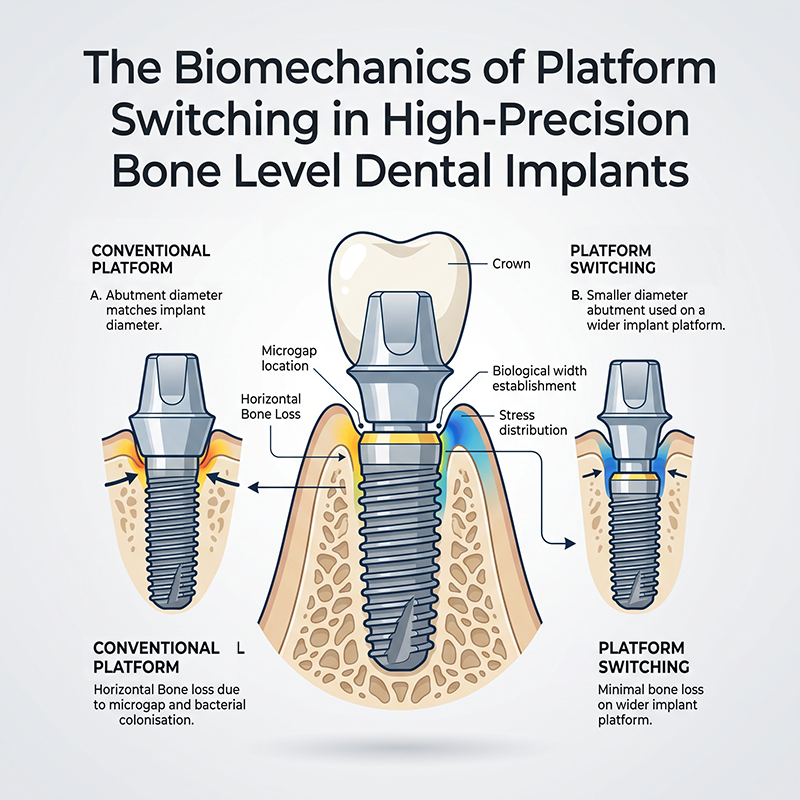
Dental Implants have revolutionized restorative dentistry, providing a durable solution for missing teeth and restoring oral function and aesthetics. Among the latest innovations is the concept of platform switching, especially applied to high-precision bone level dental implants. Platform switching refers to the intentional use of an abutment with a diameter smaller than that of the implant platform. This design modification has been widely studied for its potential to preserve crestal bone and enhance the biomechanical environment around implants.
Understanding platform switching’s biomechanics is essential, not only for clinicians but also for potential buyers and patients seeking the best outcome from their Tooth Implant procedures. This article delves into the science behind platform switching, its impact on bone preservation, and its practical benefits when implemented in bone level dental implant systems.
Biomechanical Effects of Platform Switching: A Three-Dimensional Finite Element Analysis
Several studies, including rigorous three-dimensional finite element analyses, have examined the impact of platform switching on stress distribution in peri-implant bone tissue. In essence, platform switching alters the loading mechanics at the bone level interface by concentrating forces away from the bone crest. This rearrangement leads to reduced stress concentrations, a critical factor in minimizing bone resorption and promoting long-term implant stability.
Finite element models demonstrate that platform switching reduces micro-movement and allows for more uniform loading across the implant system. By integrating a smaller abutment, forces are directed centrally and deep within the implant, rather than at the margin of the bone crest. This effect is particularly beneficial in high-precision bone level dental implant systems, as they rely on accurate positioning and stable integration into the alveolar bone.
The outcomes of finite element analysis underline that platform switching not only enhances biomechanical behavior but also establishes a favorable biological environment. Preservation of the crestal bone facilitates soft tissue adaptation and supports improved aesthetics in tooth implant restoration.
Clinical Implications of Platform Switching in Bone Level Dental Implants
In practical dental implantology, the choice to adopt platform switching influences both the short-term and long-term success of implant therapy. Studies comparing conventional and platform-switched implants consistently report greater preservation of marginal bone around the latter. Clinicians have identified several benefits beyond simple bone conservation:
Firstly, platform switching promotes a better seal between the abutment and the implant, minimizing bacterial penetration and subsequent inflammation. This is critical in achieving predictable outcomes for implant-supported dental prostheses. Furthermore, crestal bone preservation ensures that the surrounding gingival tissue maintains the natural emergence profile, leading to superior aesthetic results.
Platform switching is most effective when performed with bone level dental implants, as these are designed to integrate closely with the bone tissue. High-precision manufacturing ensures a perfect match between implant and abutment, reducing gaps that could harbor bacteria or jeopardize mechanical stability. Consequently, buyers seeking advanced dental implants—whether for personal use or wholesale purchasing from sources like dental implants from China—should prioritize systems equipped with platform switching capability for greater reliability.
Comparing Different Implant Systems: Platform Switching vs Conventional Approaches
The dental industry offers a variety of implant systems, each with distinct features and biomechanical performance. Comparing platform switching implants with conventional designs reveals noteworthy differences in clinical outcomes. With conventional implants, the abutment matches the diameter of the implant platform, resulting in increased bone remodeling at the crestal level due to microgap formation and inconsistent load transfer.
In contrast, platform switching systems leverage a narrower abutment, which mitigates these concerns. Experimental research on two different implant systems using three-dimensional finite element analysis shows that platform switching consistently reduces crestal bone stress. Moreover, patients who receive platform switching implants enjoy better soft tissue health and lower risk of implant failure.
Manufacturers have responded by refining implant-abutment interfaces, focusing on precision engineering. If you are considering dental implants from China or other origin, it is vital to assess their compatibility with platform switching, ensuring you secure both biomechanical and biological benefits.
Factors Influencing the Success of Platform Switching in Tooth Implant Procedures
Several factors determine the effectiveness of platform switching in dental implant therapy. One crucial aspect is the alignment and fit between the implant and abutment. For platform switching to work optimally, the components must be manufactured with high precision. Gaps at the interface diminish the mechanical and biological advantages of platform switching, making manufacturing standards a key consideration for buyers and clinicians.
Another influencing factor is the patient’s bone quality and the thickness of peri-implant tissues. Platform switching has a greater protective effect in patients with thin gingival biotypes or at sites where crestal bone is fragile. Pre-operative planning utilizing digital imaging and modeling enables clinicians to select the most appropriate implant system for each individual case.
Surgical technique also plays a role. Platform switching is best implemented with a minimally invasive approach, reducing trauma to the bone and optimizing healing. Post-operative care, including regular maintenance and monitoring, is essential to maintain the implant’s biomechanical integrity and ensure crestal bone preservation.
Platform Switching and Long-Term Outcomes in Bone Level Dental Implants
Longevity and success rates are paramount for anyone considering a tooth implant. Platform switching has been linked to improved long-term outcomes, especially in high-precision bone level implants. Preservation of marginal bone contributes to the stability of the implant over time, reducing the incidence of peri-implantitis—a leading cause of implant failure.
Long-term studies indicate that platform-switched bone level implants retain greater volumes of crestal bone compared to their conventional counterparts. This preservation translates into sustained functional performance and continued aesthetic satisfaction. Furthermore, the stress distribution advantages afforded by platform switching reduce micro-movement at the interface, preventing loosening and mechanical fatigue.
Patients and buyers alike should be mindful of these benefits when selecting an implant system. High-precision bone level implants utilizing platform switching represent a forward-thinking investment in dental health and quality of life.
Frequently Asked Questions About Platform Switching in Dental Implants
Q: What is platform switching in dental implant systems?
A: Platform switching refers to using a smaller-diameter abutment on a broader implant platform. This design change shifts load away from the bone crest, lowering stress concentrations and minimizing bone loss around the implant.
Q: How does platform switching improve biomechanics in bone level dental implants?
A: Three-dimensional finite element analyses show that platform switching creates more favorable stress distribution, leading to reduced micro-movement, improved mechanical stability, and enhanced bone preservation.
Q: Are there specific implant systems that offer better platform switching performance?
A: Yes, high-precision bone level dental implants, often available from leading manufacturers including dental implants from China, are designed for platform switching compatibility. Evaluate engineering standards and precision manufacturing when choosing an implant system.
Q: Does platform switching affect soft tissue aesthetics?
A: By preserving the crestal bone and maintaining gingival contour, platform switching supports natural-looking restorations with improved soft tissue aesthetics around tooth implants.
Q: Is platform switching suitable for all dental implant procedures?
A: While platform switching is widely applicable, its advantages are most pronounced in cases with thin biotype or where crestal bone preservation is a priority. Consult with your dental specialist to determine if this approach fits your clinical needs.